
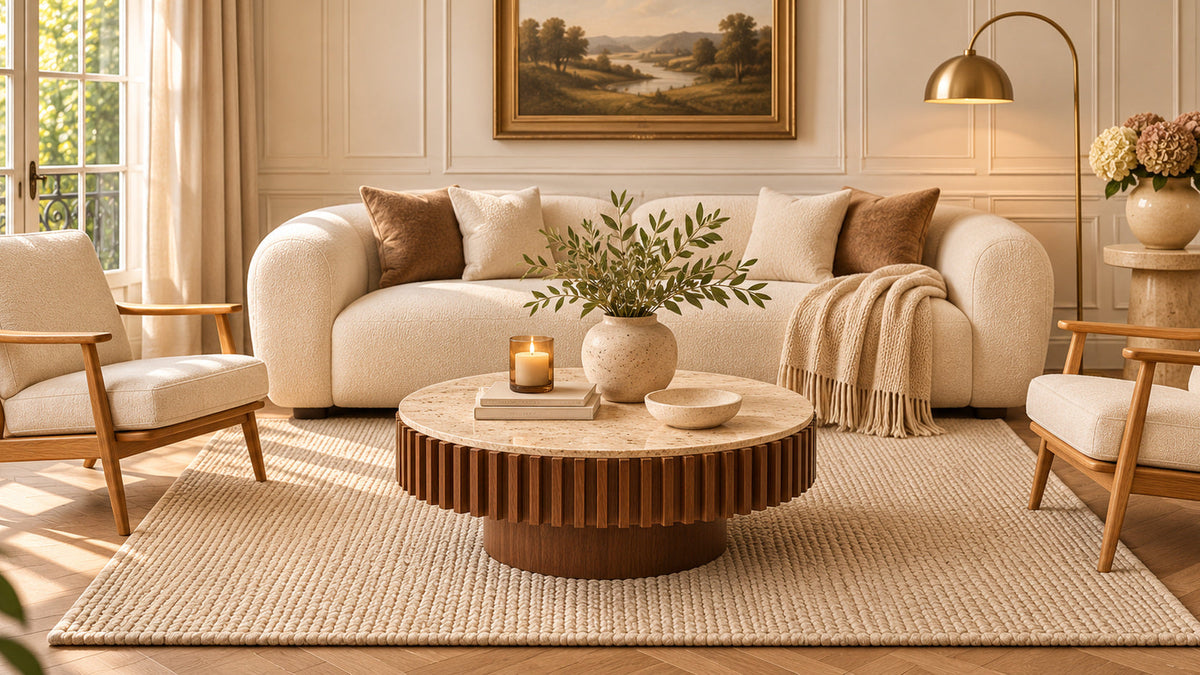
The Maison Jahvauns Guide to Rug Dimensions, Furniture Arrangements, Materials and Beautifully Balanced Living Rooms
A beautiful living room is rarely defined by one piece of furniture alone. It is the relationship between the sofa, armchairs, coffee table and surrounding materials that creates a sense of harmony.
And few elements bring these pieces together as effectively as a thoughtfully chosen rug.
A rug introduces warmth beneath the furniture, softens the architectural lines of a room and creates a visual foundation for the seating arrangement. In a Parisian-inspired interior, it can also provide a beautiful contrast to natural wood flooring, sculptural furniture and refined decorative details.
Yet choosing the right living room rug is not simply a matter of selecting a colour or pattern.
Its dimensions influence how spacious a room feels. Its placement determines whether the furniture appears connected or disconnected. Its material affects comfort, maintenance and the way the space is experienced every day.
At Maison Jahvauns, we believe the most successful interiors are created through considered proportions and materials that complement one another naturally.
This guide explores how to choose the perfect living room rug, from understanding dimensions and furniture placement to selecting materials, textures and colours that remain elegant for years to come.
How Do You Choose the Right Rug for a Living Room?
The best living room rug is one that suits the proportions of your seating arrangement, complements the surrounding furniture and offers the right balance of comfort and practicality.
Begin by measuring the area occupied by your sofa, armchairs and coffee table rather than considering the room's dimensions alone.
For many living rooms, a rug measuring 160 × 230 cm can work beneath a compact seating arrangement, while 200 × 290 cm often provides greater flexibility for positioning the front legs of sofas and armchairs on the rug. Larger arrangements may benefit from 240 × 340 cm or more.
Where possible, choose a rug that visually connects the main furniture pieces. Consider how its material, pile height and colour will complement the room, and always mark the proposed dimensions on the floor before purchasing.
The aim is not simply to fill an empty area, but to create a balanced foundation for the entire living space.
Why Rug Size Matters More Than You Think
One of the most common challenges when furnishing a living room is achieving the right relationship between individual pieces.
A sofa may be beautifully proportioned, a coffee table carefully selected and an armchair perfectly positioned, yet the arrangement can still feel incomplete. Often, the missing element is a rug that connects them visually.
A rug that is too small may appear isolated beneath the coffee table, leaving the surrounding furniture disconnected. Conversely, an oversized rug can extend too far into circulation areas or overwhelm a compact room.
The ideal size depends on the furniture arrangement rather than a universal rule. In a generous living room, a large rug can accommodate the entire seating group, creating a cohesive and luxurious impression. In a smaller room, positioning the front legs of the sofa and armchairs on the rug may provide the same visual connection without requiring as much floor coverage.
The most important consideration is proportion. A rug should feel intentional in relation to the furniture, allowing the seating area to read as one harmonious composition.
Think About the Furniture, Not Just the Floor
It can be tempting to measure the available floor space and select a rug that fits neatly within it. However, this approach overlooks the relationship between the rug and the furniture. Instead, begin with the sofa. Consider its width, the position of nearby armchairs and the dimensions of the coffee table. Together, these pieces establish the footprint of the seating arrangement. The rug should support that footprint.
The coffee table also plays an important role in establishing these proportions. If you're still considering the right dimensions or shape for your seating area, our guide to choosing the perfect coffee table for your living room explores how to create a comfortable, beautifully balanced arrangement.
For example, a long sofa paired with two substantial armchairs will generally require a larger rug than a compact two-seater with a single occasional chair.
Similarly, an open-plan living room may benefit from a generous rug that visually distinguishes the seating area from the dining space. By treating the rug as part of the furniture arrangement rather than a separate decorative accessory, it becomes easier to achieve a balanced result.
How to Choose the Right Living Room Rug Size
Living room rugs are available in numerous dimensions, but several common sizes provide useful starting points. The correct choice depends on your furniture, room proportions and preferred placement arrangement.

Rug size and placement: A 160 × 230cm wool rug positioned beneath a coffee table, demonstrating how a smaller rug can define a seating area without extending beneath the sofa.
120 × 170 cm — For Compact Arrangements
A 120 × 170 cm rug is generally best suited to smaller seating arrangements, individual reading corners or accent areas.
It may work beneath a compact coffee table with limited surrounding furniture, although it will often be too small to visually connect a full-size sofa and multiple armchairs.
For this reason, it should be selected carefully when furnishing a main living room. In a larger space, a rug of this size may be more effective beneath a single armchair and side table, creating a distinct reading area.
160 × 230 cm — For Smaller Living Rooms
A 160 × 230 cm rug is a versatile option for compact living rooms and carefully arranged seating areas. It can work particularly well with a smaller sofa, an occasional chair and a modest coffee table.
Depending on the dimensions of the furniture, the front legs of the sofa may sit on the rug while the rear legs remain on the surrounding floor.
However, this size will not suit every sofa. A particularly wide sofa may extend beyond the rug's edges, making the arrangement feel disproportionately narrow. Before purchasing, compare the rug's width with the sofa and consider whether the rug will provide sufficient coverage to connect the other seating pieces.
200 × 290 cm — For Medium to Large Living Rooms
A 200 × 290 cm rug often provides a more generous foundation for a conventional living room seating arrangement. Its larger dimensions can accommodate the front legs of a substantial sofa and may allow nearby armchairs to sit partly on the rug.
This can create a more cohesive appearance, particularly where the coffee table occupies the centre of the seating group. For rooms with several furniture pieces, this size often provides greater flexibility than a smaller rug. Nevertheless, the correct orientation matters.
The longer side will frequently run parallel to the sofa, but the most appropriate arrangement depends on the room's shape and the position of the furniture.
240 × 340 cm and Larger — For Generous Seating Areas
Larger rugs are particularly effective in spacious living rooms, open-plan interiors and arrangements featuring substantial sofas or multiple armchairs. A 240 × 340 cm rug may provide enough coverage for an entire seating group, depending on furniture dimensions and spacing.
This creates a unified foundation and can make a generously furnished room feel especially considered. In open-plan interiors, a large rug also helps establish a distinct living area without introducing physical partitions. However, generous dimensions should not come at the expense of circulation. Ensure there is sufficient space to move comfortably around the furniture and that the rug does not create an awkward boundary across frequently used walkways.
Measure Before You Choose
Before ordering a rug, arrange your furniture in its intended position. Measure the overall seating footprint, including the sofa, armchairs and coffee table. Then use low-tack painter's tape to mark the proposed rug dimensions on the floor. Stand back and consider how the arrangement looks from different points in the room.
Does the rug connect the furniture? Does it extend sufficiently beyond the coffee table? Is there comfortable circulation around the seating area? This simple exercise can prevent one of the most common furniture-buying disappointments: discovering that a rug looks considerably smaller in the room than expected.
For additional measurements and visual references, consult our Maison Jahvauns Rug Size Guide before making your final selection.
How to Position a Rug Beneath Living Room Furniture
Choosing the correct dimensions is only part of the decision. The way a rug sits beneath the furniture can significantly influence the appearance of the room. Three arrangements are particularly useful.
All Furniture Legs on the Rug
In this arrangement, the sofa, armchairs and coffee table sit entirely within the rug's boundaries. This approach works especially well in larger living rooms, where a generous rug can accommodate the full seating group without making the arrangement feel crowded.
It creates a cohesive, grounded appearance and can be particularly effective in open-plan interiors. Allow enough rug to remain visible around the furniture so the arrangement does not appear compressed. The aim is to create a generous visual foundation, rather than fitting every piece onto the smallest possible surface.
Front Furniture Legs on the Rug
For many living rooms, positioning the front legs of the sofa and armchairs on the rug offers an elegant balance between proportion and practicality. The rear legs remain on the surrounding floor, while the front legs visually connect the furniture to the central seating area.
This arrangement is particularly useful when a rug is not large enough to accommodate every furniture piece entirely. It can also help create a unified composition without covering an excessive amount of flooring. The important detail is consistency.
Where possible, arrange the main seating pieces so they share a clear relationship with the rug, rather than having one chair positioned awkwardly outside the arrangement.
The scale of your armchairs can also influence how much rug coverage is needed. Our guide to choosing the perfect armchair for your living room explores proportions, placement and how to select seating that complements your sofa.
A Central Rug Beneath the Coffee Table
A smaller rug positioned beneath the coffee table can work in compact living rooms or carefully styled occasional seating areas. However, it requires particular attention to proportion. If the rug is substantially narrower than the sofa and does not connect to the surrounding furniture, it may appear isolated.
To avoid this, ensure the rug extends visibly beyond the coffee table and feels appropriately scaled to the seating arrangement. This approach is generally more successful in smaller spaces than in large living rooms with substantial furniture.
The Maison Note — A rug should bring the seating arrangement together, not appear as an afterthought beneath the coffee table. When its proportions feel right, the entire room becomes more balanced.
Choosing the Right Rug Material
A rug's material influences far more than its appearance. It determines how the surface feels beneath your feet, how it responds to everyday use and the level of maintenance it may require. When selecting a living room rug, consider both the aesthetic character of the material and the practical demands of the household.

Natural rug materials compared: the soft, handwoven texture of the Aurore Oyster Wool Rug alongside the distinctive chocolate and natural jute-cotton weave of the Marius Diamond Pattern Rug.
Wool Rugs — Natural Warmth and Enduring Character
Wool is a classic choice for living rooms, valued for its softness, natural resilience and ability to introduce warmth. Its fibres can provide a comfortable surface beneath furniture while bringing subtle depth to neutral interiors.
Wool rugs are particularly appealing in rooms designed around natural materials, including linen upholstery, wooden furniture and stone surfaces. Depending on construction, wool rugs may shed fibres, particularly when new, and can require appropriate care to preserve their appearance.
For households seeking a natural material with a refined, tactile quality, wool is often an excellent option.
The Aurore Oyster 100% Wool Handwoven Textured Rug offers a beautiful example of this approach. Its understated oyster colouring and handwoven surface introduce subtle depth beneath neutral upholstery, making it particularly suited to living rooms where warmth, texture and quiet elegance take precedence over decorative pattern.
Jute Rugs — Organic Texture and Relaxed Elegance
Jute introduces a distinctive woven texture that complements natural wood, stone and understated upholstery. Its earthy appearance makes it particularly effective in warm neutral interiors. A jute rug can bring a relaxed quality to a formal living room, softening architectural details and balancing polished furniture finishes.
However, jute generally feels firmer underfoot than a plush wool rug. It is also sensitive to prolonged moisture and may be less suitable for areas where frequent spills are expected. Its appeal lies in its natural character, making it especially beautiful in thoughtfully styled living rooms where organic materials are central to the design.
For a more decorative interpretation of natural fibres, the Marius Chocolate and Natural Jute Cotton Handwoven Diamond Pattern Rug combines warm earthy tones with a distinctive woven geometric design. Its combination of jute and cotton makes it a considered choice for living rooms where natural texture and understated pattern are equally important.
Cotton Rugs — Lightweight and Versatile
Cotton rugs can offer a softer, more relaxed appearance and are often available in woven constructions. Their relatively lightweight character can make certain designs easier to reposition than heavier rugs. However, durability and maintenance depend heavily on the rug's construction.
A tightly woven cotton rug may perform differently from a loosely constructed design, and not every cotton rug is machine washable. Always consult the manufacturer's care instructions before selecting a rug for a frequently used living room.
Synthetic Rugs — Practicality and Design Flexibility
Synthetic materials, including polypropylene and polyester, are widely used in contemporary rug construction. They can provide a variety of textures, colours and patterns, often at more accessible price points than some natural fibres.
Certain synthetic rugs are designed for stain resistance and everyday practicality, although performance varies between products. When choosing a synthetic rug, consider its pile construction, backing, cleaning requirements and intended use rather than assuming all synthetic fibres perform identically.
A well-selected synthetic rug can offer a practical solution for busy living rooms without compromising the overall design.
Blended Materials
Some rugs combine natural and synthetic fibres or use several natural materials within the same construction. These blends can introduce distinctive textures and may balance different performance characteristics.
A wool-and-sisal blend offers a different tactile experience from a soft wool pile, combining contrasting natural fibres within a single design. Our Pascal Cream Sisal Wool Blend Bouclé Rug with Mocha Border, for example, illustrates how tonal variation and woven texture can introduce character without relying on a bold decorative pattern.
The most important consideration is the finished rug's actual composition and care requirements. Choose the material for the way it will be used, not simply for its appearance in a photograph.
Understanding Rug Texture and Pile Height
Texture is one of the most effective ways to introduce depth into a living room, particularly when the colour palette is restrained.
A softly textured rug can make an interior feel warmer, while a flatter woven surface may create a more relaxed, architectural impression. Pile height also affects practicality.
Flatweave and Low-Pile Rugs
Flatweave and low-pile rugs are often effective beneath coffee tables and seating arrangements. Their relatively flat surfaces can provide greater stability for furniture and are generally easier to accommodate beneath frequently moved chairs.
They also suit interiors where the beauty of the weave or material is intended to remain visible. Natural jute rugs, certain wool weaves and many synthetic designs fall within this broader category.
Medium-Pile Rugs
Medium-pile rugs can offer a balance between softness and everyday functionality. They introduce a more cushioned feeling beneath the feet without necessarily creating the depth associated with a high-pile rug.
This can make them appealing in living rooms used regularly for relaxing and entertaining. However, the suitability of any rug beneath furniture depends on its density and construction as well as its pile height.
High-Pile and Deeply Textured Rugs
High-pile rugs create a softer, more enveloping appearance. They can be particularly inviting in relaxed seating areas where comfort is the primary consideration. However, longer fibres may require more careful maintenance and can make lightweight furniture less stable.
They may also be less practical beneath dining-style chairs or furniture that is moved frequently. For a living room with a substantial coffee table and several armchairs, consider whether a deeply textured rug will provide the stability and ease of cleaning you require.
Let the Rug Complement the Upholstery
A rug does not need to match the texture of the sofa. In fact, contrasting materials often create a more sophisticated result. A smooth linen sofa may sit beautifully above a softly woven wool rug. A richly upholstered velvet armchair can contrast with the natural irregularity of jute.
Similarly, a sculptural stone coffee table can feel warmer when positioned above a textured rug. The objective is to create variation without allowing too many competing surfaces to overwhelm the room.
For a deeper look at combining natural materials, upholstery and decorative finishes, explore our Journal feature on the art of layering textures in a living room, where we consider how contrasting surfaces create warmth and understated elegance.
Choosing Living Room Rug Colours and Patterns
Colour influences how a rug relates to the furniture, flooring and architectural features around it. A rug can blend quietly into the interior or provide a deliberate moment of contrast. Neither approach is inherently better. The correct choice depends on the atmosphere you wish to create.

Pattern and colour in a neutral living room: the Marius Chocolate & Natural Jute Cotton Rug introduces warmth and geometric contrast alongside the Éveline Cream Sofa and Marceau Dark Emperador Marble Coffee Table.
Neutral Rugs for Timeless Interiors
Cream, ivory, oatmeal, taupe and warm beige rugs are particularly effective in understated living rooms. These shades complement natural wood, pale stone and a wide range of upholstery colours. They also allow furniture silhouettes and architectural details to remain prominent.
However, a neutral rug should not necessarily match the sofa exactly. A subtle difference in tone can create depth, particularly when the two pieces have contrasting textures. For example, an ivory sofa may feel more grounded above a warm oatmeal rug than an identical shade of cream.
Introduce Contrast With Deeper Tones
A darker rug can introduce definition into a light interior. Warm brown, charcoal, muted olive and earthy terracotta can work beautifully alongside cream upholstery and natural timber.
These shades may be particularly effective where the furniture is pale and the room would benefit from a stronger visual foundation. Consider the flooring as well. A dark rug on dark timber may create a very different effect from the same rug placed on pale oak.
Where possible, compare material samples in the room's natural daylight before committing to a colour.
Pattern Without Overwhelming the Room
Pattern can introduce individuality while helping connect different furniture finishes. Subtle geometric designs, tonal borders and softly varied woven patterns often work well in timeless interiors. A more expressive patterned rug can also be beautiful, particularly when the surrounding furniture is restrained.
The key is balance. If the sofa, armchairs and decorative cushions already introduce several strong patterns, a quieter rug may provide visual relief. Conversely, a neutral seating arrangement can offer the perfect foundation for a rug with a more distinctive design. Choose a pattern that complements the room's wider character rather than relying solely on current trends.
Rug Placement for Different Living Room Layouts
The same rug can appear beautifully proportioned in one room and unsuitable in another. Understanding the layout is therefore just as important as selecting the dimensions.
Small Living Rooms
In a compact living room, begin with the sofa and coffee table. A rug that sits beneath the front sofa legs and extends beyond the coffee table can help create a connected seating arrangement.
Avoid choosing an excessively small rug simply because the room is limited in size. A slightly larger rug can sometimes make a compact arrangement feel more cohesive, provided it does not obstruct circulation.
Long or Rectangular Living Rooms
Rectangular rooms often benefit from rugs that follow the direction of the main seating arrangement. If the sofa sits along the longer wall, positioning the rug's longest side parallel to the sofa may create a balanced appearance.
However, the orientation should also account for nearby armchairs and the coffee table. The objective is to connect the seating group rather than simply mirror the room's shape.
Open-Plan Living and Dining Rooms
In an open-plan interior, a rug can help distinguish the living area from the surrounding space. A generous rug beneath the seating arrangement creates a clear visual boundary without introducing a physical divider.
This is particularly effective where the living and dining areas share similar flooring and wall colours. Ensure that the rug's edges do not interfere with the principal routes between different areas of the room.
Large Living Rooms
Spacious interiors often require more generous rug dimensions than initially expected. A small rug beneath a substantial sofa can leave the seating arrangement feeling fragmented, even when the furniture itself is beautifully selected.
Where possible, choose a rug that accommodates the main furniture group or connects its principal pieces. In particularly large rooms, separate rugs may help define distinct seating or reading areas. However, each should have a clear purpose and relate to the surrounding furniture.
Creating a Layered Parisian Living Room
Parisian-inspired interiors offer a beautiful example of how rugs can contribute to an atmosphere of understated luxury. Traditional architectural details, natural timber flooring and refined furniture silhouettes create a setting in which texture becomes particularly important.

A layered Parisian living room: the Aurore Oyster Wool Rug brings warmth and texture to a curated setting featuring the Éveline Cream Sofa, Gaspard Natural Burl Wood Coffee Table and Rémi Natural Linen Armchair.
A softly woven rug can introduce warmth beneath a sculptural coffee table.
A natural jute design may provide an organic contrast to marble and aged brass.
A richly textured wool rug can soften the relationship between a linen sofa and a dark wooden cabinet.
These combinations work because the materials complement one another without appearing overly coordinated. Consider the relationship between the rug and the coffee table. A pale travertine table may feel particularly beautiful above a warmer, textured surface, while a substantial dark wooden table can be softened by an ivory or oatmeal rug.
The same principle applies to armchairs. A velvet accent chair can introduce richness against a natural woven rug, while a wooden-framed chair may feel especially harmonious alongside a softly textured wool design. The aim is not to match every material, but to create a thoughtful balance between softness, structure and warmth.
At Maison Jahvauns, we are drawn to interiors that feel collected rather than overly styled. A rug should contribute to this sense of effortless elegance, connecting the furniture while allowing each piece to retain its individuality.
Common Living Room Rug Buying Mistakes
Even a beautiful rug can disappoint when its dimensions, material or placement have not been considered carefully. Avoiding a few common mistakes can make a significant difference.
Choosing a Rug That Is Too Small
A rug that sits only beneath the coffee table may make the surrounding furniture feel disconnected. Before purchasing, consider whether the rug is large enough to relate visually to the sofa and armchairs. Where possible, select dimensions that connect the principal seating pieces.
Ignoring the Sofa's Width
A long sofa paired with a narrow rug can create an unbalanced appearance. Compare the sofa's width with the rug's dimensions and consider how much rug will remain visible on either side. The relationship should feel deliberate rather than accidental.
Selecting a Material Based Only on Appearance
A deeply textured rug may look beautiful in an editorial photograph but require more maintenance than expected. Similarly, a natural jute rug may complement the room aesthetically while feeling firmer underfoot than desired. Consider the household's needs, cleaning requirements and intended use before selecting the material.
Forgetting About Furniture Stability
Long-pile rugs and certain loosely woven constructions may be less suitable beneath lightweight tables or frequently moved chairs.
Ensure the rug provides an appropriate surface for the furniture it will support. A suitable rug underlay can also help reduce movement and improve stability, depending on the rug and flooring.
Overlooking Doorways and Circulation
A rug should not interfere with doors, create awkward transitions or obstruct frequently used walkways. Check the position of its edges and the clearance around nearby furniture before purchasing.
Choosing Colour Without Considering Natural Light
A rug can appear different under warm artificial lighting, cool daylight and direct sunlight. Where possible, assess samples in the intended room and consider how the colour interacts with the flooring and upholstery. This is especially important when combining several neutral shades.
Frequently Asked Questions
What size rug is best for a living room?
The best size depends on the dimensions of your sofa, armchairs and overall seating arrangement. A 160 × 230 cm rug may suit a compact living room, while 200 × 290 cm often provides greater flexibility for medium-sized seating arrangements. Larger rooms may require 240 × 340 cm or more.
Should a living room rug go under the sofa?
A living room rug does not need to sit entirely beneath the sofa. Positioning the front sofa legs on the rug is a popular and effective arrangement. In larger rooms, placing all furniture legs on a generously sized rug can create a cohesive appearance.
Should a rug be wider than the sofa?
In many seating arrangements, a rug that extends beyond both ends of the sofa creates a balanced appearance. However, this is not an absolute rule. The correct dimensions depend on the furniture layout, rug orientation and whether nearby armchairs also need to be accommodated.
Is a 160 × 230 cm rug big enough for a living room?
A 160 × 230 cm rug can work well in a smaller living room with a compact sofa and carefully positioned furniture. It may be too small for a substantial sofa or a seating arrangement featuring several large armchairs. Measuring the furniture footprint is essential.
Is a 200 × 290 cm rug suitable for a large sofa?
A 200 × 290 cm rug can work with many larger sofas, particularly in a front-legs-on arrangement. However, the sofa's exact width, the presence of additional seating and the desired rug orientation will determine whether it provides sufficient coverage.
What rug material is best for a living room?
Wool is a popular choice for its natural softness and resilience. Jute offers organic texture, while certain synthetic rugs can provide practical stain resistance and design flexibility. The best material depends on comfort preferences, household activity and maintenance requirements.
What colour rug makes a living room look bigger?
Light neutral shades can help create an airy, visually open impression, particularly when they complement the surrounding flooring and furniture. However, correct rug proportions and placement are often just as important as colour when creating a sense of space.
Should the coffee table sit in the centre of the rug?
The coffee table is commonly positioned near the centre of the seating arrangement and often near the centre of the rug. However, the arrangement should prioritise comfortable access from the sofa and armchairs rather than strict symmetry.
Do I need a rug underlay?
A suitable rug underlay is often advisable, particularly on smooth flooring where movement may occur. It can help improve stability and comfort, but the correct type depends on the rug's backing and the flooring material. Always check compatibility with the floor manufacturer's guidance.
Can you put a rug over carpet?
Yes, a rug can be placed over carpet to introduce colour, texture or define a seating area. However, movement and unevenness may be more noticeable depending on the carpet pile and rug construction. A suitable carpet-to-rug underlay may help keep the arrangement stable.
Conclusion: Choosing a Rug That Brings the Room Together
The perfect living room rug is not necessarily the largest, softest or most decorative design.
It is the one that brings balance to the furniture arrangement, complements the materials surrounding it and suits the way the room is used.
Begin with the dimensions of your sofa and seating area. Consider whether an all-legs-on or front-legs-on arrangement will provide the most harmonious result.
Then explore materials, textures and colours that feel appropriate for your home.
A natural woven rug may introduce warmth beneath a stone coffee table. A softly textured wool design can complement linen upholstery, while a subtle pattern may bring individuality to an otherwise restrained interior.
Above all, take time to consider proportion.
A thoughtfully selected rug has the ability to connect individual furniture pieces and transform a living room into a cohesive, inviting space.
If you're ready to explore different materials, textures and colours, discover the Maison Jahvauns Rug Collection, featuring thoughtfully selected designs to complement both contemporary and traditionally inspired living rooms.
At Maison Jahvauns, we believe this attention to detail is what makes an interior feel truly considered. Beautiful rooms are not created through decoration alone, but through the quiet relationship between furniture, materials and the spaces we live in.
Editorial Standards
Written by Shackeem — Founder & Furniture Curator, Maison Jahvauns
Maison Jahvauns was founded with a simple belief: exceptional furniture should be timeless, thoughtfully curated and designed to elevate the way we live. Every collection is personally selected by Shackeem, with a focus on refined craftsmanship, elegant proportions and enduring design inspired by Parisian interiors.
The Jahvauns Journal reflects the same philosophy. Every guide is written to help homeowners make informed furniture and interior design decisions through practical advice, timeless styling principles and carefully researched buying guidance. Rather than following short-lived trends, our articles are created to inspire elegant homes that remain beautiful for years to come.
Our Editorial Promise
Every article published in The Jahvauns Journal is independently written by Maison Jahvauns and reviewed for accuracy before publication. Our recommendations are based on timeless design principles, thoughtful furniture curation and a commitment to helping readers create refined interiors with confidence.
We regularly review and update our editorial content to ensure it remains relevant, accurate and valuable for our readers.
Last updated: 20 November 2026
Part of The Jahvauns Journal — Curated guides for timeless interiors.
Continue Exploring Maison Jahvauns
A thoughtfully chosen rug is only one element of a beautifully balanced living room.
Discover The Parisian Salon Collection, where elegant sofas, armchairs, coffee tables and carefully curated furniture create the foundation for timeless interiors.
For further inspiration, explore The Jahvauns Journal, our collection of practical furniture guides and editorial perspectives on refined living.
The most beautiful interiors begin with considered choices, where every piece contributes to the harmony of the whole.