
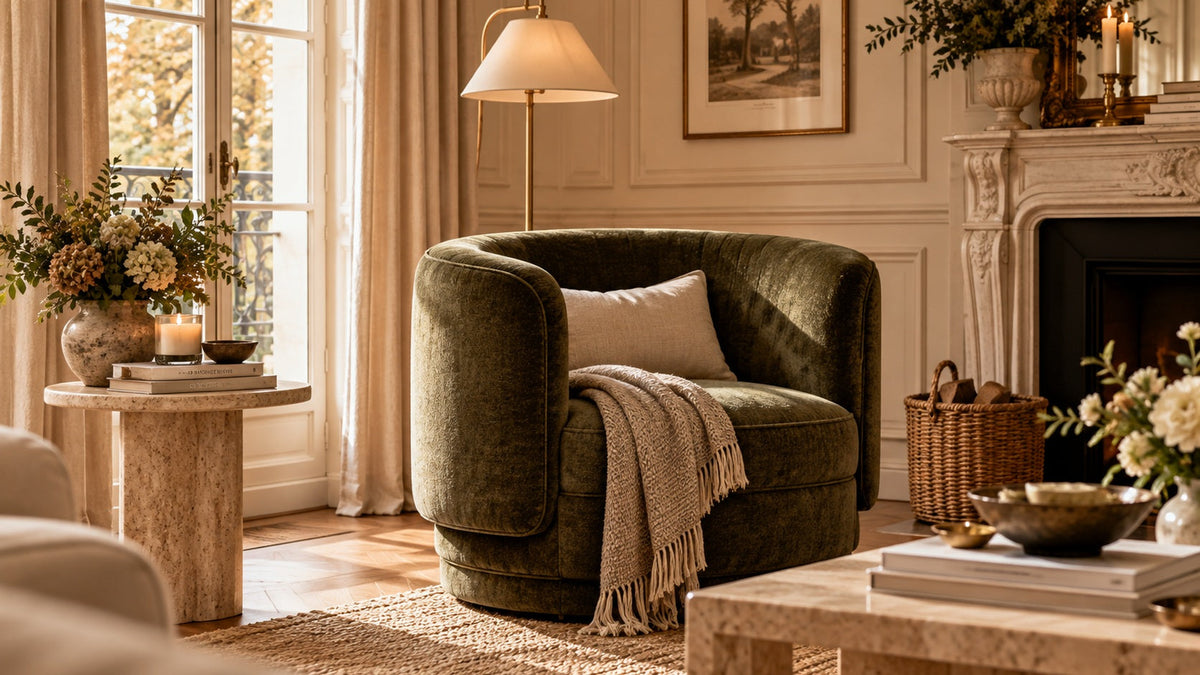
The Maison Jahvauns Guide to Comfort, Proportion and Timeless Style
An armchair is one of the most personal pieces of furniture you can introduce into a living room.
Unlike a sofa, which often serves the entire household, an armchair can create a place that feels distinctly your own. Somewhere to read in the afternoon, enjoy a quiet morning coffee or settle into at the end of the day. Yet choosing the right armchair involves more than finding a beautiful silhouette.
Its proportions must work with the surrounding furniture. Its upholstery should suit the way you live. Its seat depth, backrest and arm height should offer the comfort you expect, while its materials and design should remain appealing long after passing trends have faded.
At Maison Jahvauns, we believe the finest armchairs achieve a careful balance between comfort, craftsmanship and character. This guide explores how to choose an armchair that feels at home in your living room, from practical dimensions and upholstery choices to thoughtful placement and timeless Parisian-inspired styling.
How Do You Choose the Perfect Armchair?
To choose the perfect armchair, consider how you intend to use it, measure the available space and compare seat height, depth, back support and upholstery. Select a silhouette that complements your existing furniture without necessarily matching it. Allow comfortable circulation around the chair, prioritise durable materials and choose proportions that feel balanced within the room.
Reading time: 18 minutes
Start With How You'll Use Your Armchair
Before comparing fabrics or finishes, consider the role your armchair will play. A chair intended for occasional guests may have very different requirements from one used for reading every evening.
For Everyday Relaxation
If the armchair will be used regularly, comfort should guide the decision. Consider the depth of the seat, the angle of the backrest and whether the arms provide comfortable support. A generously upholstered chair may create a welcoming place to relax, but its dimensions should still suit the person using it. An attractive armchair that encourages an uncomfortable sitting position is unlikely to become a favourite.
For Reading
A reading chair benefits from supportive seating, comfortable armrests and suitable lighting. A chair positioned beside a window can provide pleasant natural light during the day, while a floor lamp or nearby table lamp makes the space usable in the evening. An occasional table can hold a book, cup or reading glasses without requiring the reader to reach across the room.
For Occasional Seating
An accent armchair may be used less frequently, allowing greater emphasis on sculptural form or decorative upholstery. However, even an occasional chair should provide reasonable comfort. Beautiful furniture should contribute to the experience of living in a room, not simply its appearance.
For Conversation
When an armchair forms part of a seating arrangement, consider how naturally it allows people to interact. A chair angled slightly towards a sofa can create a more welcoming arrangement than one placed rigidly against a wall. The objective is to create a comfortable relationship between seating pieces rather than forcing every item to face the same direction.
Choose the Right Armchair Size and Proportions
An armchair should feel substantial enough to be comfortable without overwhelming its surroundings.
This is particularly important in smaller living rooms, where even a modest difference in width or depth can affect circulation.
Understand Overall Armchair Dimensions
When reviewing an armchair, examine its complete measurements rather than focusing on width alone.
|
Measurement |
Why it matters |
|---|---|
|
Overall width |
Determines how much floor space the chair occupies |
|
Overall depth |
Affects circulation and how far the chair projects into the room |
|
Overall height |
Influences visual weight and its relationship with surrounding furniture |
|
Seat height |
Affects how comfortably you can sit down and stand up |
|
Seat depth |
Influences posture and leg support |
|
Seat width |
Determines the available sitting space |
|
Arm height |
Affects comfort and compatibility with nearby tables |
As a broad guide, many living room armchairs measure approximately 70–100cm wide, although compact occasional chairs and generously upholstered designs can fall outside this range. Always rely on the dimensions of the individual product.
Allow Space Around the Armchair
An armchair needs more than its physical footprint. Consider the space required to approach it, sit down, extend your legs and move around it.
Where a chair sits beside a main circulation route, approximately 75–90cm of clear passage is a useful starting point, although the appropriate allowance depends on the room and its occupants. Smaller clearances may work in less frequently used areas.
Consider Visual Weight
Two armchairs of identical width can feel very different within a room. A chair with an open wooden frame and slender legs may appear lighter than a fully upholstered chair with a substantial base. Neither is inherently better. The appropriate choice depends on the room's scale, surrounding furniture and the atmosphere you want to create.
The Maison Note - A beautifully proportioned armchair should have enough presence to be appreciated without becoming an obstacle. Before choosing a chair, consider both the space it occupies and the space it needs around it.
Understand Seat Height, Depth and Comfort
Comfort is personal. An armchair that feels wonderfully relaxed to one person may feel too deep, too low or insufficiently supportive to another. Understanding seating dimensions helps you make a more informed choice.
Seat Height
Seat height is measured from the floor to the top of the seating surface, with some variation depending on whether the cushion is compressed.
Many armchairs have seat heights around 40–48cm, although designs vary considerably. Lower seating can create a relaxed appearance but may be less convenient for someone who prefers an upright sitting position. Higher seats can make sitting down and standing up easier for some users.
Seat Depth
Seat depth influences how much support the chair provides beneath the thighs and how comfortably the sitter can rest against the backrest.
A deeper seat can encourage lounging, particularly when paired with a generously upholstered back. A shallower seat may suit those who prefer a more upright posture. When seated with your back comfortably supported, your feet should ideally rest naturally on the floor unless the chair is intentionally designed for reclining.
Backrest Support
Consider the height, angle and firmness of the backrest. A high-backed armchair may provide additional upper-back or head support, while a lower curved back can create a more compact, sculptural silhouette. The most suitable option depends on how long you intend to sit and the posture you find comfortable.
Armrest Height
Armrests should support the arms without forcing the shoulders upwards. Their shape also affects how easily you can enter or leave the chair. Broad upholstered arms can feel generous and comfortable, while narrower wooden arms may create a lighter appearance.
Whenever possible, test a comparable chair in person or compare its detailed dimensions with a chair you already find comfortable.
Explore Different Armchair Styles and Silhouettes
An armchair's silhouette often determines its character more strongly than its colour. Understanding the differences between styles can help you choose furniture that complements the room.
Curved Armchairs
Curved armchairs introduce softness through rounded backs, sweeping arms and sculptural upholstery.

Their flowing forms can balance rooms dominated by straight lines, rectangular tables and architectural mouldings. A forest-green curved armchair, for example, can introduce colour and visual interest without requiring additional decorative furniture.
The Apolline Forest Green Chenille Effect Curved Armchair offers an example of this approach. Its rounded silhouette and richly coloured upholstery can bring softness and definition to a neutral living room, particularly when paired with natural wood, warm lighting and understated decorative details.
These designs are particularly effective as standalone accent pieces.
Traditional Upholstered Armchairs
Traditional armchairs often feature structured backs, upholstered arms and generous cushioning. Depending on their detailing, they can feel formal, relaxed or quietly elegant. They work particularly well in interiors where comfort and enduring character are equally important.
Wooden-Framed Armchairs
Armchairs with exposed wooden frames introduce material contrast.

Oak, walnut and other timber finishes can provide warmth while allowing the chair's construction and silhouette to remain visible.
An armchair upholstered in natural linen with a dark oak frame can sit comfortably alongside painted cabinetry, brass lighting and other natural materials.
The Rémi Natural Linen & Dark American Oak Wood Armchair brings these materials together in a considered design. Its combination of natural upholstery and dark timber provides a refined contrast, making it particularly suitable for living rooms that balance traditional character with quieter contemporary furnishings.
Accent Chairs
An accent chair is generally chosen to introduce a distinctive design element, although it should remain functional seating. Accent chairs may feature unusual curves, open backs, contrasting materials or expressive upholstery. They can work particularly well when the main sofa is understated.
High-Back Armchairs
High-back designs can establish a strong vertical presence. They may suit reading areas, fireplace arrangements or larger living rooms where a lower chair would appear visually insignificant. However, their height should be considered carefully in rooms with low ceilings or restricted space.
Contemporary Sculptural Chairs
Sculptural chairs emphasise shape, proportion and the relationship between solid and open space. These designs can complement traditional interiors when their materials and scale are thoughtfully chosen.
A contemporary silhouette beside an antique-inspired console or carved fireplace can create a pleasing contrast. The objective is not to make every furniture piece belong to the same period, but to establish a coherent visual relationship.
Choose the Right Upholstery Fabric
Upholstery influences how an armchair looks, feels and performs over time. The right fabric should complement the design while remaining appropriate for the chair's intended use.

Velvet
Velvet is valued for its softness, depth of colour and subtle interaction with light. It can create a particularly rich appearance in deep green, burgundy, charcoal or warm neutral shades. However, velvet varies significantly in fibre composition, pile and performance.
Some types show pressure marks or changes in the direction of the pile more readily than others. Review the manufacturer's care guidance before purchasing.
Linen and Linen Blends
Linen offers a relaxed, natural appearance. Its visible texture can soften a structured wooden frame or introduce a quieter material contrast. Pure linen may crease more readily than some blended upholstery fabrics. Linen blends can provide a similar aesthetic with different performance characteristics.
Bouclé
Bouclé upholstery has a distinctive looped or textured surface. It can add softness and depth to a neutral interior, particularly in ivory, cream and oatmeal shades. However, some loosely constructed bouclé fabrics may be vulnerable to snagging. The weave and durability of the specific upholstery should be considered carefully.
Chenille
Chenille fabrics are often selected for their soft, tactile finish. Depending on their construction, they may offer a smooth or subtly textured surface with a gentle sheen. A chenille-effect armchair can introduce warmth without the pronounced pile appearance of some velvets.
Tweed and Textured Woven Fabrics
Tweed and other woven upholstery fabrics can introduce understated pattern and visual depth. They are particularly effective when paired with visible wooden frames. A grey tweed armchair, for example, can complement dark oak, aged brass and warm neutral surroundings.
Consider Practical Upholstery Performance
For regularly used seating, look beyond the fabric name. Consider the manufacturer's information about abrasion resistance, colourfastness, cleaning requirements and suitability for domestic upholstery.
Where provided, abrasion-test results can help compare fabrics, but they should not be treated as a complete guarantee of longevity. The fabric's construction, seams, exposure to sunlight and everyday care also influence its performance.
Consider Frame Materials and Construction
An armchair's internal structure is as important as its visible upholstery. A beautiful fabric cannot compensate for poor construction or inadequate support.
Solid Wood Frames
Solid timber can provide a durable structural foundation when properly selected, joined and constructed. However, the term solid wood alone does not guarantee quality. Joinery, reinforcement, timber preparation and overall manufacturing standards also matter.
Engineered Wood Components
Some upholstered furniture combines solid timber with engineered wood components. This is not automatically a sign of inferior quality. The suitability of these materials depends on their grade, application and the construction of the complete frame.
Cushion Filling
Seat cushions may contain foam, fibre, feathers or combinations of materials.
Foam can provide a more structured sitting experience, while fibre and feather-based fillings may offer a softer feel but require more frequent adjustment. The most suitable filling depends on your comfort preferences and willingness to maintain the cushions.
Examine the Details
When comparing armchairs, consider the quality of stitching, upholstery tension, frame stability and finishing. If the chair has exposed timber, examine the consistency of the finish and the treatment of joints. If detailed construction information is unavailable, ask the retailer or manufacturer before purchasing.
Find the Right Colour for Your Living Room
Colour should be considered in relation to the entire room rather than as an isolated decision. The sofa, flooring, walls, curtains and larger furniture pieces all influence how an armchair will appear.
Neutral Armchairs
Cream, ivory, taupe, stone and warm grey upholstery can create a flexible foundation.
Neutral armchairs are particularly useful when the room already contains strong colours, patterned rugs or distinctive architectural details. They also allow seasonal changes through cushions, throws and nearby accessories.
Rich, Muted Colours
Forest green, muted burgundy, chocolate brown and deep blue can introduce character without feeling excessively decorative. These shades often work beautifully with natural wood, warm metallic finishes and neutral walls. A richly coloured armchair can become the focal point of an otherwise restrained room.
For an example of how these colours can work alongside natural wood and elegant upholstery, explore The Autumn House: Introducing Our Autumn/Winter 2026 Collection, where we bring together richly coloured seating and timeless furniture in a warm, considered interior.
Consider Natural Light
Colours can appear different throughout the day. A deep green chair may look vibrant beside a sunlit window and considerably darker in a shaded corner. Where possible, review upholstery samples under the lighting conditions of your own home.
Avoid Matching Every Colour
A living room rarely needs every upholstered piece to share the same fabric. A neutral sofa can work beautifully with a contrasting armchair, provided the colours and materials feel considered together.
The relationship between pieces matters more than exact coordination.
Position an Armchair Within Your Living Room Layout
An armchair's position affects both the appearance and functionality of the room. Even a beautifully selected chair can feel awkward when placed without considering circulation and sightlines.
Opposite the Sofa
An armchair positioned opposite a sofa can help establish a conversational arrangement. This works particularly well when the room has a central coffee table or fireplace. Ensure the space between the seating pieces remains comfortable and practical.
Beside the Sofa
Placing an armchair beside the sofa can create a relaxed, sociable composition. A slight angle often feels more natural than aligning every piece in a rigid row.
Near a Window
A chair beside a window can make effective use of natural light and create a pleasant place to read. However, consider whether direct sunlight could cause upholstery fading over time.
Beside a Fireplace
A fireplace can provide a natural focal point for an armchair. Maintain appropriate clearance from heat sources and follow the guidance for the fireplace and furniture materials. Avoid placing upholstery where it could be exposed to excessive heat.
In an Underused Corner
An empty corner can become a useful seating area when furnished thoughtfully. A compact armchair, floor lamp and occasional table may be sufficient. There is no need to fill the space with additional decorative objects.
Pair Your Armchair With a Sofa or Coffee Table
The most elegant living rooms often contain furniture that complements rather than matches.
Balance the Sofa's Proportions
A substantial sofa may benefit from an armchair with a lighter frame or more open silhouette. Conversely, a compact sofa can sometimes be balanced by a generously upholstered accent chair. Consider height as well as width. An exceptionally tall chair beside a very low sofa can create an uneven composition unless that contrast is intentional.
Coordinate Materials
Look for relationships between finishes. A dark oak armchair frame may complement a wooden coffee table, while a velvet chair can introduce softness beside a leather or linen sofa. These relationships need not be exact. Subtle differences often make a room feel more collected and personal.
Consider the Coffee Table
The coffee table should remain accessible without restricting movement. Avoid positioning an armchair so close to the table that sitting down becomes difficult. Likewise, a table placed too far away may offer little practical benefit.
The coffee table's shape, height and proportions also influence how comfortably the seating arrangement functions. How to Choose the Perfect Coffee Table for Your Living Room explores these considerations in greater detail, helping you select a table that complements your armchair and sofa without compromising circulation.
The appropriate distance depends on the chair's seat depth, the table's dimensions and how the furniture is used.
Use a Side Table Where Necessary
A small occasional table can be more practical than relying entirely on a central coffee table. It creates a convenient surface for a lamp, book or drink while helping define the armchair's place within the room.
The Maison Note - A living room becomes more interesting when its furniture shares a sense of proportion and material harmony rather than identical styling. A curved upholstered armchair beside a simple wooden table can feel more personal than a perfectly matching suite.
Create an Elegant Reading Corner
A reading corner does not require a large room. It simply needs a comfortable chair, suitable lighting and a small amount of practical space.

Begin With the Chair
Choose an armchair that supports the way you prefer to sit. If you read for extended periods, comfort should take priority over sculptural appearance.
Add Layered Lighting
Natural light is valuable during the day, but a dedicated reading light makes the space more useful. Position the light to illuminate the page without creating uncomfortable glare. An adjustable floor lamp may be particularly practical.
For a more complete approach to lighting around armchairs and other seating, How to Layer Living Room Lighting Like an Interior Designer explains how ambient, task and accent lighting can create a comfortable atmosphere throughout the room.
Introduce a Small Table
A side table provides a convenient surface without requiring additional cabinetry. Its height should work comfortably with the chair's arms and seating position.
Keep Decoration Restrained
A small stack of books, a ceramic vessel or a simple arrangement of flowers may be sufficient. The chair should remain the principal feature. A reading corner feels most inviting when it offers somewhere to relax rather than another surface to decorate.
Choose an Armchair for a Small Living Room
A small living room can still accommodate an elegant armchair. The key is choosing a design whose physical and visual proportions suit the available space.
Consider Compact Silhouettes
Chairs with narrower arms or more upright backs can provide seating without occupying as much floor space as generously proportioned lounge chairs. However, compact does not necessarily mean comfortable. Always compare the usable seat dimensions.
Look for Exposed Legs
Visible legs can create a sense of openness by allowing more floor to remain visible. This can make a chair appear lighter within a compact room.
Avoid Excessive Depth
An unusually deep armchair may project too far into the room and obstruct circulation. Measure from the back of the chair to its furthest front point, not simply the seat cushion.
Choose One Strong Piece
In a small room, one beautifully chosen armchair can be more effective than several smaller seating pieces. A distinctive chair can introduce personality without creating visual clutter.
Preserve the Main Walkways
Avoid forcing people to move around furniture at awkward angles. If an armchair makes a doorway, fireplace or main walkway difficult to access, reconsider its position or dimensions.
Introduce Parisian Character Without Overdecorating
Parisian-inspired interiors often combine decorative architectural details with furniture that feels collected over time. An armchair can contribute to this atmosphere without requiring an entire room to follow a particular historical style.
For a wider approach to creating this collected aesthetic, How to Curate a Parisian Salon in Your Home explores how furniture silhouettes, architectural character, natural materials and decorative restraint work together in an elegant living space.
Mix Traditional and Contemporary Shapes
A curved modern armchair can sit comfortably beside a classical fireplace or carved wooden console. Similarly, a traditional wooden-framed chair may provide warmth in a more contemporary setting.
If your living room includes a console table, How to Style a Console Table Like an Interior Designer explores how to use lighting, artwork and carefully chosen decorative objects to create a balanced arrangement that complements nearby seating.
The contrast should feel deliberate rather than accidental.
Prioritise Beautiful Materials
Natural wood, tactile upholstery, subtle metallic finishes and softly textured fabrics can create depth without excessive ornament. These materials also allow different furniture styles to coexist.
Allow the Chair to Have Its Own Character
An accent armchair need not replicate the sofa. It can introduce a different silhouette, upholstery texture or colour while still belonging to the wider composition.
Use Decorative Details Sparingly
A cushion, throw or nearby lamp can soften the arrangement. However, too many accessories may obscure the chair's silhouette. Where an armchair has beautiful curves, exposed timber or distinctive upholstery, allow those qualities to remain visible.
Care, Maintenance and Long-Term Practicality
An armchair should remain enjoyable to use for years, making practical maintenance an important part of the buying decision.
Follow Upholstery Care Instructions
Different fabrics require different cleaning methods. Some can be gently vacuumed with an upholstery attachment, while others need specialist care. Always follow the manufacturer's instructions and avoid applying cleaning products without checking suitability.
Protect Against Direct Sunlight
Prolonged sunlight can cause certain fabrics and finishes to fade. Consider window coverings or repositioning furniture where exposure is particularly strong.
Maintain Cushions
Where cushions are removable or reversible, regular rotation may help distribute wear. Some fillings also benefit from occasional plumping. Follow the specific guidance for the chair.
Consider Everyday Use
Households with children, pets or frequent visitors may benefit from upholstery selected for easier maintenance. A delicate fabric can still be appropriate, but it should be chosen with an understanding of its practical requirements.
Think Beyond Initial Appearance
Consider whether the chair will remain comfortable, useful and visually compatible with the room as your needs change. A well-chosen armchair should not require the surrounding room to be redesigned whenever decorative preferences evolve.
The Maison Jahvauns Principle
The perfect armchair should feel as considered as it looks — balancing comfort, proportion and enduring character within the room.
At Maison Jahvauns, we believe an armchair should contribute something meaningful to the home. It might provide a quiet place to read, introduce warmth through natural materials or bring softness to an otherwise architectural space.
Its value lies not simply in how it looks when first introduced, but in how naturally it becomes part of everyday life. An armchair chosen with care can remain relevant as colours, accessories and surrounding furniture evolve. That is the essence of timeless furniture.
Common Armchair Buying Mistakes
1. Choosing Appearance Over Comfort
A striking silhouette is appealing, but it should not come at the expense of the chair's intended function.
Consider seat depth, height and support before purchasing.
2. Ignoring Overall Dimensions
A chair may appear compact in a product photograph but occupy considerable floor space.
Always measure the complete footprint.
3. Forgetting Circulation
Allow enough room to approach the chair and move comfortably around it.
4. Buying a Chair That Is Too Deep
Deep seating can be comfortable for lounging but may not suit everyone.
Compare the seat depth with a chair you already enjoy using.
5. Matching the Sofa Too Closely
Identical upholstery and silhouettes can sometimes make a room feel overly coordinated.
Complementary pieces often create greater visual interest.
6. Choosing Upholstery Without Considering Maintenance
Fabric appearance is only one factor.
Cleaning requirements, durability and everyday use should also influence the choice.
7. Overlooking Armrest Height
Armrests affect posture and comfort.
They can also influence how conveniently the chair works beside a table.
8. Choosing a Colour in Isolation
Consider the chair alongside flooring, walls, curtains and existing furniture.
9. Filling an Empty Corner Unnecessarily
Not every corner needs an armchair.
Furniture should serve a purpose rather than simply occupy space.
10. Ignoring the Chair's Visual Weight
A fully upholstered chair may feel much more substantial than an open-framed design of similar dimensions.
11. Using Inadequate Reading Light
A comfortable reading chair is less useful without suitable lighting.
12. Following a Short-Lived Trend
A fashionable shape or colour may be appealing, but consider whether it suits the room and your long-term preferences.
Frequently Asked Questions
What should I look for when buying an armchair?
Consider comfort, overall dimensions, seat height, seat depth, back support, upholstery and frame construction. The chair should suit its intended use and fit comfortably within the room.
What is the most comfortable type of armchair?
Comfort depends on the individual. An armchair with suitable seat depth, supportive cushioning, a comfortable backrest and well-positioned armrests is generally preferable to choosing by style alone.
What is a good seat height for an armchair?
Many armchairs have seat heights of approximately 40–48cm, but the ideal height depends on the user's proportions and preferred sitting position.
How wide should a living room armchair be?
Many armchairs measure around 70–100cm wide, although compact and oversized designs can fall outside this range. Choose according to available floor space and usable seating dimensions.
How much space should you leave around an armchair?
Allow enough space to sit comfortably and move around the chair. For main circulation routes, approximately 75–90cm of clear passage is a useful starting point where the room permits.
Should an armchair match the sofa?
No. An armchair can complement the sofa through colour, materials, proportion or design character without using identical upholstery.
What colour armchair goes with a neutral sofa?
Forest green, taupe, cream, muted blue, burgundy and warm brown can all complement a neutral sofa. The best choice depends on the room's wider palette and natural light.
Is velvet a good fabric for an armchair?
Velvet can be an excellent upholstery choice for its softness and rich appearance. Its suitability depends on the specific fabric's construction, durability and cleaning requirements.
Is linen upholstery suitable for everyday use?
Linen and linen blends can work well for everyday seating, although their performance varies. Consider the fabric's weave, care instructions and suitability for regular domestic use.
Are curved armchairs comfortable?
Curved armchairs can be comfortable when their seat dimensions, backrest and cushioning suit the user. The curved silhouette alone does not determine comfort.
What is the difference between an armchair and an accent chair?
An armchair generally refers to an individual upholstered or framed chair with arms. An accent chair is selected partly for its decorative contribution and may or may not have arms.
Can you put an armchair in a small living room?
Yes. Choose an appropriately scaled design, measure its overall depth and preserve clear circulation. Chairs with slender arms or exposed legs may feel visually lighter.
Where should an armchair go in a living room?
Common positions include beside or opposite a sofa, near a fireplace, alongside a window or within a reading corner. The best location depends on circulation, lighting and how the room is used.
Should an armchair face the sofa or television?
Either arrangement can work. Position the chair according to its main purpose, whether conversation, television viewing, reading or relaxation.
What type of armchair suits a Parisian-inspired living room?
Curved upholstered chairs, traditional wooden-framed armchairs and refined accent chairs can all complement Parisian-inspired interiors. Prioritise elegant proportions, tactile materials and a balanced relationship with surrounding furniture.
How do I make an armchair look elegant?
Choose a chair with considered proportions, position it thoughtfully and keep accessories restrained. A well-placed lamp, occasional table or single cushion may be enough to complete the arrangement.
Conclusion
The perfect armchair is not necessarily the largest, most decorative or most expensive design.
It is the chair that feels right for the room and the person who uses it. Its proportions should complement the surrounding furniture. Its upholstery should suit everyday life. Its construction should inspire confidence, and its comfort should encourage you to return to it.
Whether you favour a richly upholstered curved silhouette, a traditional wooden-framed design or a quietly elegant neutral chair, the most successful choice is one that balances beauty with genuine practicality.
At Maison Jahvauns, we believe that a thoughtfully chosen armchair should feel less like an addition to a room and more like a natural part of the home. A piece to live with, season after season.
Once you've chosen the right chair, the next step is making it feel at home within your interior. Our guide to styling an armchair in your living room like an interior designer explores furniture placement, complementary side tables, lighting and beautifully balanced seating arrangements.
Editorial Standards
Written by Shackeem — Founder & Furniture Curator, Maison Jahvauns
Maison Jahvauns was founded with a simple belief: exceptional furniture should be timeless, thoughtfully curated and designed to elevate the way we live. Every collection is personally selected by Shackeem, with a focus on refined craftsmanship, elegant proportions and enduring design inspired by Parisian interiors.
The Jahvauns Journal reflects the same philosophy. Every guide is written to help homeowners make informed furniture and interior design decisions through practical advice, timeless styling principles and carefully researched buying guidance. Rather than following short-lived trends, our articles are created to inspire elegant homes that remain beautiful for years to come.
Our Editorial Promise
Every article published in the Jahvauns Journal is independently written by Maison Jahvauns and reviewed for accuracy before publication. Our recommendations are based on timeless design principles, thoughtful furniture curation and a commitment to helping readers create refined interiors with confidence.
We regularly review and update our editorial content to ensure it remains relevant, accurate and valuable for our readers.
Last updated: 14 October 2026
Part of the Maison Jahvauns Journal — Curated guides for timeless interiors.
Continue Exploring Maison Jahvauns
A beautifully chosen armchair can introduce comfort, character and balance to a living room.
Explore The Parisian Salon Collection to discover our curated selection of armchairs, accent seating, coffee tables and complementary living room furniture.
For further guidance on creating timeless interiors, visit The Jahvauns Journal, where our furniture buying guides, styling advice and editorial stories explore how individual pieces can work together throughout the home.