
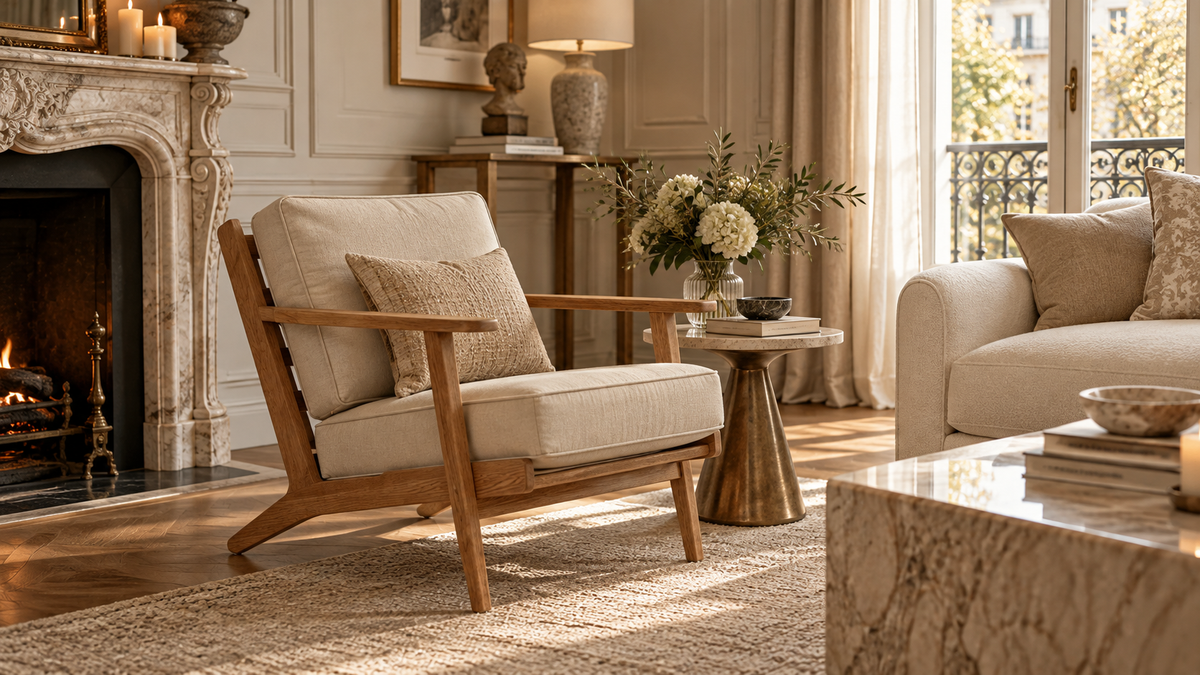
The Maison Jahvauns Guide to Elegant Seating Arrangements, Thoughtful Layering and Timeless Living Room Style.
An armchair can transform the atmosphere of a living room without requiring an entirely new furniture arrangement.
Positioned thoughtfully, it can soften the lines of a sofa, introduce a beautiful contrast in upholstery or create an inviting corner that might otherwise go unused. A carefully chosen armchair can also bring a sense of individuality to a room, making the space feel collected rather than simply furnished.
Yet styling an armchair involves more than placing a cushion on the seat or positioning a small table beside it.
The relationship between furniture proportions, lighting, colour and surrounding objects determines whether the arrangement feels natural or unnecessarily decorative. Even the angle of a chair can influence how welcoming a living room feels.
If you're still deciding which chair belongs in your space, our guide to choosing the perfect armchair for your living room explores comfort, dimensions, upholstery and timeless silhouettes before you begin styling.
At Maison Jahvauns, we believe elegant interiors are created through considered relationships between individual pieces. An armchair should contribute to the room's character while remaining comfortable, practical and entirely at home within its surroundings.
In this guide, we explore how to style an armchair like an interior designer, from creating balanced seating arrangements and layering textures to designing an elegant reading corner and introducing timeless Parisian character.
How Do You Style an Armchair in a Living Room?
To style an armchair in a living room, position it in relation to the sofa, fireplace or natural light, then introduce complementary furniture and accessories. Pair the chair with an appropriately sized side table, add practical lighting and use cushions or throws sparingly. Balance its colour, upholstery and proportions with the surrounding furniture while preserving comfortable circulation.
Reading time: 15 minutes
Start With the Armchair's Position in the Room
Before introducing cushions, lighting or decorative accessories, consider where the armchair should sit.
Its position will determine how naturally it functions within the room and how successfully it contributes to the overall furniture arrangement. An armchair should not simply occupy an empty space. Ideally, it should establish a relationship with another feature, whether that is the sofa, a fireplace, a window or a small occasional table.
Position the Armchair Beside the Sofa
Placing an armchair beside a sofa is one of the simplest ways to create a cohesive seating arrangement. Rather than aligning the chair rigidly with the sofa, consider turning it slightly towards the centre of the room. This subtle adjustment can make the seating feel more conversational and less formal.
The armchair does not need to match the sofa in colour or upholstery. A contrast in silhouette or material can introduce visual interest while maintaining a harmonious arrangement. For example, a curved upholstered armchair can soften the straight lines of a contemporary sofa, while a wooden-framed chair can introduce warmth beside generously upholstered seating.
Position the Armchair Opposite the Sofa
An armchair positioned opposite a sofa can help define a more intimate conversation area. This arrangement is particularly effective when the seating surrounds a coffee table or faces a fireplace. Consider the distance between the furniture pieces. The arrangement should encourage conversation without making the room feel crowded or preventing comfortable movement.
Where the living room is large, a rug can help visually connect the sofa, armchair and central table.
Create a Focal Point Beside a Fireplace
A fireplace provides a natural architectural feature around which to arrange furniture. An armchair positioned to one side can introduce softness and balance, particularly when paired with a small table or understated floor lamp. Avoid placing the chair so close to the fireplace that heat could affect the upholstery or frame. Appropriate clearances depend on the type of fireplace and its manufacturer's guidance.
Make Use of Natural Light
An armchair placed beside a window can create an inviting place to read, enjoy a morning coffee or simply appreciate the view. Natural light also brings out the texture of upholstery and the warmth of wooden furniture.
However, prolonged direct sunlight can cause certain fabrics and finishes to fade. Consider the window's orientation and use suitable coverings where necessary.
Allow the Arrangement to Breathe
A beautifully styled chair needs space around it. Avoid surrounding the armchair with too many small tables, lamps or decorative objects. The arrangement should feel purposeful rather than crowded. Where the chair sits beside a main walkway, approximately 75–90cm of clear circulation space is a useful starting point, although the appropriate allowance depends on the room and its occupants.
The Maison Note - An armchair rarely needs to occupy the centre of a room to become a focal point. Often, its relationship with a window, fireplace or surrounding furniture creates a stronger impression than its position alone.
How to Style an Armchair Beside a Sofa

The relationship between an armchair and sofa is one of the most important considerations in living room styling. The two pieces should feel connected without necessarily appearing identical.
Balance Different Silhouettes
Consider the shape of the sofa before choosing how to style the armchair. A sofa with broad arms and a structured back can be complemented by a chair with softer curves. Similarly, a low contemporary sofa may benefit from the visual warmth of a more traditional armchair.
The objective is to create contrast without losing balance. Pay attention to the relative heights of the furniture. A particularly tall armchair beside an exceptionally low sofa may dominate the arrangement unless that contrast is deliberate.
Coordinate Without Matching
Matching furniture can create a consistent appearance, but it is not the only way to achieve a harmonious living room. A cream sofa might be paired with a forest-green armchair, while a natural linen sofa could sit alongside a chair with dark oak framing.
Look for subtle connections through undertones, materials or surrounding accessories. A warm wooden coffee table, for example, can visually connect an oak-framed armchair with a neutral upholstered sofa.
Consider the Conversation Angle
A slight inward angle can make an armchair feel more connected to the sofa. This is particularly useful when the seating is intended for conversation rather than television viewing. Experiment with the arrangement before adding accessories. Sometimes moving a chair a small distance can noticeably improve the composition.
Use a Rug to Connect the Furniture
A rug can help establish a shared seating area, especially in an open-plan living room. Where practical, position at least the front legs of the sofa and armchair on the rug. This can create a more unified arrangement than placing each piece entirely outside it.
The exact placement will depend on the rug's dimensions and the furniture layout. Choose a rug that complements the room's materials without competing with the armchair's upholstery.
The coffee table also plays an important role in connecting the seating. Our guide to choosing the perfect coffee table for your living room explains how to balance table shape, height and proportions with the surrounding furniture.
Create a Beautiful Reading Corner

An armchair can become the foundation of a reading corner, even in a relatively compact living room. The most successful arrangements combine comfort, practical lighting and a restrained selection of surrounding furniture.
Choose a Quiet Position
A reading corner benefits from a location that feels slightly removed from the busiest part of the room. A position beside a window, bookcase or fireplace can provide a natural setting.
If your reading corner sits beside shelving, our guide to styling a large bookcase without creating clutter offers ideas for arranging books and decorative objects while maintaining a calm, considered atmosphere.
However, avoid placing the chair where people must regularly walk between it and the rest of the furniture.
Introduce a Reading Lamp
Lighting is essential to making the arrangement practical. A floor lamp with a directed or adjustable light source can illuminate a book without requiring a large table. Alternatively, a table lamp positioned beside the chair can provide a softer, more traditional arrangement. Consider the lamp's height, the direction of the light and whether it creates glare.
Add a Small Occasional Table
A reading corner rarely requires a substantial table. A compact side table can provide enough space for a book, cup or reading glasses. Choose a height that allows the surface to be reached comfortably from the chair. Natural wood, stone and restrained metallic finishes can complement upholstered seating beautifully.
Keep the Accessories Considered
A small arrangement of books, a ceramic vessel or a simple vase of flowers may be sufficient. Avoid filling every available surface. A reading corner should feel inviting and practical, rather than resembling a decorative display.
Introduce Softness Through Texture
A lightweight throw can make a reading chair feel more welcoming. Choose a fabric that complements the upholstery rather than obscuring the chair's shape. For example, a softly textured neutral throw can work beautifully with a dark-green armchair, while a warmer wool or cotton textile may complement natural linen upholstery.
The Maison Note - The most inviting reading corners are rarely the most elaborate. A comfortable armchair, beautiful light and a convenient place to set down a book are often all that is needed.
Pair Your Armchair With the Right Side Table
A side table is one of the most useful companions to an armchair. It provides a practical surface while helping the chair feel intentionally positioned within the room.
Consider the Table's Height
Ideally, the table should be comfortable to reach while seated. A surface close to the height of the armrest is often convenient, although the appropriate height depends on the chair's design. A very low table may require uncomfortable reaching, while an unusually tall table can appear awkward beside a compact chair.
Choose a Complementary Shape
The relationship between shapes can influence the overall composition. A round side table can soften a structured armchair with straight arms and an angular frame. A square or rectangular table may introduce contrast beside a curved upholstered chair. Neither approach is inherently better. Consider the balance of shapes already present in the room.
Introduce Material Contrast
Pairing different materials can create visual depth. A natural linen armchair with a dark wooden frame might sit beside a stone-topped table, while a curved velvet chair can look particularly elegant next to warm timber or aged brass. Avoid introducing too many competing finishes within a small area.
Keep the Table Styling Restrained
A side table should remain useful. Rather than filling it with decorative objects, consider one or two carefully selected pieces. A lamp and a small ceramic vessel may be sufficient, provided there is still room for everyday essentials.
Consider the Space Available
In a compact room, a small pedestal table may be more practical than a larger occasional table. Where space is particularly limited, the chair may function perfectly well without an additional surface. Furniture should respond to the room's needs rather than follow a fixed styling formula.
Layer Lighting Around Your Armchair
Lighting influences how an armchair is experienced throughout the day. The same chair can feel bright and architectural in natural daylight, then warm and intimate under softer evening lighting.
Use Task Lighting for Practical Activities
If the chair is intended for reading or other focused activities, introduce a suitable task light. An adjustable floor lamp or table lamp can provide more directed illumination than general ceiling lighting. Position the light so that it illuminates the activity without shining uncomfortably into the sitter's eyes.
Add Ambient Lighting
Ambient lighting provides the room's overall illumination. Wall lights, ceiling fixtures and softly diffused lamps can help establish a welcoming atmosphere. The armchair should feel part of this wider lighting scheme rather than existing in an isolated pool of light.
Introduce Subtle Accent Lighting
Accent lighting can highlight nearby architectural details, artwork or decorative furniture. A wall light beside a fireplace or a discreet picture light above artwork can contribute to the atmosphere surrounding an armchair. Avoid adding decorative lighting that creates unnecessary visual clutter.
Choose Lighting That Complements the Furniture
A traditional upholstered armchair may work beautifully with a slender brass lamp. A contemporary curved chair could be paired with a simpler, sculptural light. The lamp need not match the chair's style exactly, but their proportions and finishes should feel considered together.
Consider the Evening Atmosphere
Warm, comfortable lighting can make a living room feel more inviting after dark. Where suitable, dimmable lighting allows the atmosphere to change according to the activity. A reading corner may require brighter, more focused illumination than a chair used primarily for conversation.
For a more complete approach to lighting, explore our guide to layering living room lighting like an interior designer, including how to combine ambient, task and accent lighting throughout the space.
Choose Colours and Textures That Complement the Room

An armchair can introduce colour and texture without requiring significant changes to the surrounding interior. The key is understanding how its upholstery relates to the existing palette.
Style a Neutral Armchair
Cream, ivory, taupe and natural linen armchairs provide a versatile foundation. They can be paired with darker wooden furniture, warm brass lighting and textured cushions to introduce depth. In a predominantly neutral living room, variation in materials is particularly important. A linen chair beside a polished wooden table and a softly woven rug can feel layered without relying on strong colour contrasts.
Style a Forest-Green Armchair
Forest green introduces richness while remaining closely associated with natural materials. It can work particularly well with cream walls, warm oak flooring, dark timber and understated brass accents.A neutral cushion or textured throw can soften the arrangement without diminishing the upholstery's character. Avoid surrounding a statement-coloured chair with too many competing accent shades.
Style a Black Armchair
A black upholstered armchair can introduce definition into a light interior. To prevent the chair from feeling visually disconnected, consider repeating darker tones elsewhere through picture frames, lighting details or nearby furniture. The repetition should be subtle. A single black armchair does not require every accessory to be black.
Style a Bouclé Armchair
Bouclé upholstery already provides considerable texture. It may therefore benefit from simpler surrounding materials, such as smooth wood, stone or understated metallic finishes. Avoid layering too many heavily textured accessories directly onto the chair. Allow the upholstery to remain visible.
Introduce Contrast Through Materials
A room containing only smooth surfaces can feel visually flat. Combining woven upholstery, natural wood, ceramic, stone and subtle metallic finishes can create a more interesting composition. However, restraint remains important. A few complementary materials generally create a more cohesive result than numerous unrelated finishes.
The fabric of an armchair is only one part of a beautifully balanced interior. The relationship between upholstery, wood, stone and decorative finishes is equally important. For further inspiration, explore the art of layering textures in a living room and discover how contrasting materials create warmth and depth.
The same principle applies to surrounding furniture and decorative surfaces. Our guide to styling a console table like an interior designer explores how to combine objects, materials and negative space without creating clutter.
How to Style Different Armchair Silhouettes
Not every armchair should be styled in the same way. Its shape, frame and upholstery influence which surrounding pieces will complement it most effectively.
Curved Armchairs
Curved armchairs often have enough sculptural character to stand alone. Their rounded silhouettes can soften rooms dominated by rectangular sofas, straight-lined cabinetry and architectural panelling. Consider pairing a curved armchair with a simple wooden side table or a slender floor lamp. Avoid covering distinctive curved backs with oversized cushions or throws.
A richly coloured design, such as the Apolline Forest Green Chenille Effect Curved Armchair, can introduce a beautiful focal point within a neutral living room. Its rounded silhouette works particularly well alongside structured sofas, warm wooden furniture and understated brass lighting.
Wooden-Framed Armchairs
Armchairs with exposed wooden frames offer a different styling opportunity. Their structure introduces warmth, while the upholstery provides softness and comfort. A natural linen chair with dark oak framing can work beautifully alongside a stone side table, woven rug or warm metallic lamp.
The Rémi Natural Linen & Dark American Oak Wood Armchair illustrates how contrasting upholstery and timber can create a refined, understated presence. Pairing a chair of this character with a simple stone or wooden side table allows the exposed frame to remain an important part of the arrangement.
Traditional Upholstered Armchairs
Traditional armchairs can bring a sense of familiarity and permanence to a living room. They may be styled beside fireplaces, bookcases or classic occasional tables. A carefully selected cushion can introduce texture, but excessive layering may make the chair appear heavy. Consider the room's architectural character when choosing surrounding accessories.
Contemporary Accent Chairs
A contemporary accent chair can introduce contrast within a more traditional setting. Its distinctive silhouette may be most effective when surrounded by quieter furniture. Rather than adding decorative objects to emphasise the chair, allow its shape and materials to provide the interest.
High-Back Armchairs
High-back armchairs create a stronger vertical presence. They can work particularly well beside a fireplace or within a generous reading corner. Balance their height with nearby elements such as a floor lamp, artwork or bookcase. Avoid placing an exceptionally tall chair where it blocks important sightlines or natural light.
The Maison Note - The more distinctive an armchair's silhouette, the less additional decoration it usually requires. Beautiful furniture should be allowed to express its own proportions and materials.
How to Style an Armchair in a Small Living Room
A small living room can benefit from an armchair when its position and surrounding furniture are carefully considered. The objective is to create a useful seating area without compromising movement or making the room feel crowded.
Keep the Arrangement Simple
An armchair does not always need a side table, floor lamp and decorative accessories. In a compact room, one or two supporting elements may be enough. A chair beside a window with a small lamp nearby can create an inviting corner without additional furniture.
Consider Visual Weight
A chair with exposed legs or an open wooden frame may appear lighter than a fully upholstered design. This can be particularly helpful when the room already contains a substantial sofa. However, visual lightness should not come at the expense of comfort.
Use the Existing Furniture
Rather than introducing a new table, consider whether the armchair can share a coffee table with the sofa. This reduces the number of separate furniture pieces and can create a more unified arrangement.
Avoid Blocking Circulation
Ensure that the chair does not obstruct doorways, main walkways or access to other furniture. An attractive arrangement quickly becomes frustrating when it interferes with everyday movement.
Choose Accessories Carefully
A single cushion or lightweight throw may be sufficient. Too many decorative layers can make a compact chair appear crowded.
Let the Armchair Become the Feature
In a small living room, one beautifully chosen armchair can provide all the additional character the space needs. Rather than adding more decorative furniture, focus on the relationship between the chair, surrounding surfaces and natural light.
Create a Parisian-Inspired Living Room Arrangement

Parisian-inspired interiors often feel elegant because they combine furniture from different periods, materials and design traditions.
The arrangement appears collected rather than purchased as a matching set. An armchair can contribute to this atmosphere through its silhouette, upholstery and relationship with surrounding furniture.
Combine Traditional Architecture With Contemporary Seating
A curved upholstered armchair can sit comfortably within a room featuring classical wall mouldings, a marble fireplace or traditional parquet flooring. The contrast between architectural detail and contemporary furniture can create visual interest. Avoid trying to make every object historically consistent.
Introduce Natural Materials
Wood, linen, stone and subtle metallic finishes can create warmth and depth. An oak-framed armchair, for example, may complement a marble-topped table or a brass reading lamp. These materials can help connect furniture with different design influences.
Allow Furniture to Feel Collected
A Parisian-inspired room does not require every piece to match. A traditional sofa, sculptural armchair and understated wooden table can work together when their proportions and materials are considered. The relationship between the pieces is more important than strict stylistic uniformity.
Use Decorative Accessories Sparingly
A small ceramic vessel, a carefully selected artwork or a beautifully finished lamp can provide sufficient decoration. Avoid filling every available surface. Negative space allows the furniture and architectural details to remain visible.
Balance Elegance With Comfort
An elegant living room should still feel welcoming. Arrange furniture for conversation, reading and relaxation rather than solely for appearance. Soft upholstery, comfortable lighting and practical furniture placement can help create a room that feels both refined and lived in.
For a broader look at creating this atmosphere, discover how to curate a Parisian salon in your home, where we explore elegant furniture arrangements, architectural character and timeless decorative restraint.
The Maison Jahvauns Principle
An armchair should feel intentionally placed, beautifully balanced and entirely natural within the room.
At Maison Jahvauns, we believe the most elegant interiors are created through thoughtful relationships between furniture, materials and architectural character. An armchair does not need elaborate styling to make an impression.
Its silhouette may introduce softness. Its upholstery may bring warmth or colour. Its position beside a window or fireplace may create a quiet place to enjoy. The surrounding furniture should support these qualities rather than compete with them. When an armchair is positioned thoughtfully and styled with restraint, it becomes more than an additional seat. It becomes part of the room's character.
Common Armchair Styling Mistakes
1. Pushing Every Armchair Against the Wall
An armchair does not always need to sit against a wall. Moving it slightly into the room or angling it towards the sofa can create a more natural seating arrangement.
2. Matching the Sofa Too Closely
Identical upholstery and silhouettes can sometimes make a living room feel overly coordinated. Complementary colours, materials and shapes often create greater visual interest.
3. Choosing an Oversized Side Table
A large table can overwhelm a compact armchair. Consider the proportions of both pieces and the available circulation space.
4. Using Too Many Cushions
Excessive cushions can obscure the chair's silhouette and reduce usable seating space. One carefully selected cushion may be sufficient.
5. Covering Beautiful Upholstery With Throws
A throw should complement the armchair rather than conceal its materials or design.
6. Ignoring Lighting
A reading chair positioned in a poorly lit corner may be attractive but impractical. Consider how the space will be used throughout the day.
7. Creating Too Many Competing Focal Points
A distinctive armchair does not necessarily need bold artwork, a statement lamp and multiple decorative accessories beside it. Allow one element to take the lead.
8. Forgetting Circulation
Avoid arrangements that obstruct walkways or make the chair difficult to access.
9. Mixing Too Many Materials
Introducing numerous unrelated finishes can make a small seating area feel visually unsettled. Choose a restrained selection of complementary materials.
10. Choosing Accessories Without Considering Scale
A very small lamp beside a substantial armchair may feel visually insignificant, while an oversized floor lamp can dominate the arrangement. Consider the relationship between their proportions.
11. Ignoring the Room's Existing Palette
An armchair should relate to the surrounding interior, even when it introduces contrast. Consider the undertones of walls, flooring and larger furniture pieces.
12. Styling for Appearance Rather Than Everyday Living
An arrangement should remain comfortable and practical. Avoid placing accessories where they interfere with sitting, reading or moving around the room.
Frequently Asked Questions
How do you style an armchair in a living room?
Position the armchair in relation to the sofa, fireplace or window. Add a suitable side table or lamp where practical, then introduce restrained accessories that complement the chair's upholstery and silhouette.
Where should an accent chair go in a living room?
An accent chair can sit beside or opposite a sofa, near a fireplace, beside a window or within a reading corner. Choose a position that supports the room's layout and preserves comfortable circulation.
Should an armchair match the sofa?
No. An armchair can complement a sofa through colour, texture, proportions or materials without matching it exactly.
How do you style a chair beside a sofa?
Angle the chair slightly towards the sofa, consider their relative heights and introduce a shared coffee table or rug to connect the seating arrangement.
What should you put next to an armchair?
A side table, reading lamp or small decorative object can complement an armchair. Choose only what is useful and appropriate for the available space.
How do you make an armchair look elegant?
Focus on thoughtful placement, balanced proportions and restrained accessories. A beautiful lamp or small table may be enough to complete the arrangement.
Can you put an armchair in a corner?
Yes. A corner can become a comfortable reading or relaxation area when the chair is positioned with adequate space and suitable lighting.
How do you style a curved armchair?
Allow its rounded silhouette to remain visible. Pair it with a simple side table, complementary lighting and minimal accessories.
How do you style a wooden-framed armchair?
Highlight the exposed timber by pairing it with complementary materials such as stone, linen, ceramic or brass. Avoid covering the frame with excessive textiles.
What colour cushion goes with a green armchair?
Cream, oatmeal, taupe and other warm neutrals can complement a green armchair. Muted patterned fabrics may also work when they relate to the room's wider palette.
Should you put a cushion on an armchair?
A cushion can introduce comfort, colour or texture, but it is not always necessary. Sculptural armchairs may look more elegant without additional accessories.
How do you style an armchair in a small living room?
Choose a practical position, avoid oversized surrounding furniture and use accessories sparingly. Preserve circulation and allow the chair to serve a clear purpose.
What type of lamp is best beside an armchair?
An adjustable floor lamp or appropriately positioned table lamp can provide useful task lighting. The best choice depends on the chair's height, available space and intended activity.
How far should an armchair be from a coffee table?
The distance should allow comfortable access to the table without restricting movement or legroom. The appropriate spacing depends on the dimensions of the chair and table.
How do you create a reading corner with an armchair?
Choose a comfortable chair, position it in a relatively quiet area, add suitable reading light and introduce a small surface for books or drinks.
How do you create a Parisian-style armchair arrangement?
Combine elegant furniture proportions, natural materials and restrained decorative details. Allow traditional and contemporary silhouettes to coexist without requiring every piece to match.
Conclusion
Styling an armchair beautifully is less about adding decorative objects and more about understanding how the chair relates to the room. Its position, proportions, upholstery and surrounding furniture all contribute to the finished arrangement. A carefully placed armchair can create a welcoming conversation area, soften the lines of a sofa or establish a quiet reading corner beside a window.
The most successful styling choices are often the simplest: a complementary side table, beautiful lighting, a restrained textile and enough space for the chair's character to remain visible. Whether you prefer a curved upholstered design, a traditional wooden-framed armchair or a contemporary accent chair, thoughtful styling allows the furniture to feel both elegant and entirely at home.
At Maison Jahvauns, we believe timeless interiors are not defined by how much decoration they contain, but by how beautifully their individual elements work together.
Editorial Standards
Written by Shackeem — Founder & Furniture Curator, Maison Jahvauns
Maison Jahvauns was founded with a simple belief: exceptional furniture should be timeless, thoughtfully curated and designed to elevate the way we live. Every collection is personally selected by Shackeem, with a focus on refined craftsmanship, elegant proportions and enduring design inspired by Parisian interiors.
The Jahvauns Journal reflects the same philosophy. Every guide is written to help homeowners make informed furniture and interior design decisions through practical advice, timeless styling principles and carefully researched buying guidance. Rather than following short-lived trends, our articles are created to inspire elegant homes that remain beautiful for years to come.
Our Editorial Promise
Every article published in The Jahvauns Journal is independently written by Maison Jahvauns and reviewed for accuracy before publication. Our recommendations are based on timeless design principles, thoughtful furniture curation and a commitment to helping readers create refined interiors with confidence.
We regularly review and update our editorial content to ensure it remains relevant, accurate and valuable for our readers.
Last updated: 15 October 2026
Part of The Jahvauns Journal — Curated guides for timeless interiors.
Continue Exploring Maison Jahvauns
An elegantly styled armchair can introduce comfort, individuality and balance to a living room. The key is choosing furniture that complements your space and allowing each piece to contribute naturally to the overall arrangement.
Explore the Maison Jahvauns Armchair Collection to discover thoughtfully curated seating, from sculptural upholstered designs to timeless wooden-framed armchairs.
For a wider selection of complementary furniture, discover The Parisian Salon Collection, featuring elegant occasional tables, statement seating and considered finishing pieces.
Beautiful interiors are not created by filling every corner, but by choosing pieces that belong together.