
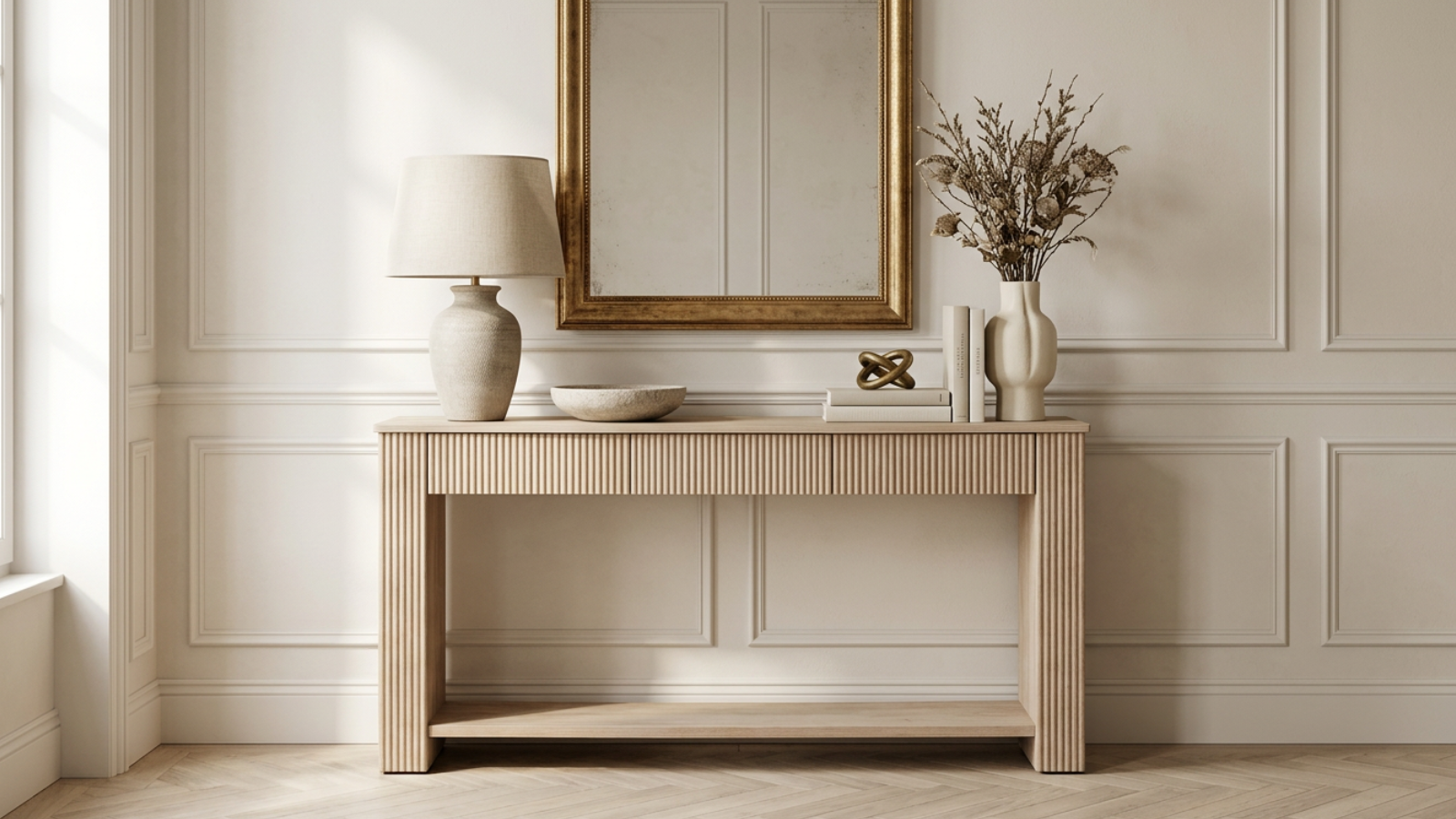
A console table may be one of the most versatile pieces of furniture in the home.
Slim enough to sit comfortably within a hallway yet substantial enough to anchor a living room wall, a beautifully styled console can transform an otherwise overlooked area into a considered part of the interior.
The challenge is knowing what to place on it.
Too many decorative objects can make a console feel cluttered. Too few can leave it looking unfinished. And when everything is the same height or arranged too symmetrically, even beautiful accessories can lack the effortless character associated with professionally designed interiors.
Interior designers tend to approach console table styling differently.
Rather than treating the surface as somewhere to simply place decorative objects, they consider the entire composition—from the furniture itself and the wall above it to lighting, scale, texture and the surrounding architecture.
The result should feel layered without appearing crowded, elegant without becoming overly formal, and personal without losing visual cohesion.
In this guide, we'll explore how to style a console table like an interior designer, including what to place above it, how many accessories to use, how to balance different heights and how to adapt your styling for hallways, living rooms and dining spaces.
A console table is best styled by combining objects of different heights, shapes and textures while leaving enough empty space for the arrangement to breathe. Anchor the composition with a mirror or artwork, introduce height through lighting or a vase, and finish with smaller decorative objects for a layered, balanced appearance.
13 min read
Start with the Console Table Itself
Before choosing accessories, consider the character of the console table.
Its proportions, material and architectural detailing should influence everything placed around it.
A substantial wooden console with carved detailing already has considerable visual presence. It may require only a few restrained accessories to feel complete.
A beautifully crafted wooden console table can therefore become part of the decoration itself, particularly when natural grain, carved detailing or architectural proportions provide visual interest before any accessories are introduced.
A simpler console, meanwhile, can comfortably accommodate more decorative layering.
Consider:
- The width and depth of the tabletop.
- The height of the console.
- Whether it includes drawers or shelving.
- The colour and finish of the material.
- The amount of visual detail within the design.
- The scale of the surrounding wall.
The furniture should remain part of the composition rather than disappearing beneath its accessories.
This is particularly important when styling beautifully crafted pieces. Decorative objects should complement the craftsmanship of the console, not compete with it.
✦ Maison Jahvauns Editor's Note
Begin with the furniture, not the accessories. A beautifully proportioned console table often needs far less decoration than you imagine. Allow craftsmanship, material and silhouette to contribute to the composition.
Anchor the Space Above the Console
One of the most important decisions is what sits above the console table.
Without something to visually anchor the wall, even a carefully styled tabletop can feel disconnected from the room.
There are several particularly effective options.
A Large Mirror
A mirror is perhaps the most timeless choice.
Choosing the right mirror involves more than selecting a frame that complements the console. Scale, shape, placement and even the view reflected within the glass all influence the finished composition. Explore our complete guide to How to Choose the Perfect Wall Mirror for Every Room for more detailed advice.
A carefully chosen wall mirror adds height to the composition, reflects natural light and can make narrow hallways or smaller rooms feel more spacious.
An ornate gold-framed mirror can introduce traditional elegance, while a simpler round or oval design creates a softer, more contemporary effect.
For interiors that favour a more decorative, classical focal point, an ornate gilded mirror such as the Valère Ornate Champagne Gilded Wall Mirror can bring additional architectural character to the arrangement.
As a general principle, the mirror should feel proportionate to the console beneath it rather than appearing either excessively small or wider than the furniture itself.
Artwork
A large painting or framed print creates a different character.
Artwork allows colour, personality and visual interest to become part of the arrangement without requiring additional objects on the tabletop.
One substantial piece often looks more sophisticated than several small frames, particularly above a wide console.
A Layered Arrangement
For a more relaxed, collected-over-time appearance, artwork can be leaned against the wall and layered with smaller framed pieces or a mirror.
This works particularly well in informal living spaces where perfect symmetry might feel too rigid.
Whatever you choose, think of the wall and console as one complete composition, rather than decorating them independently.
Create Height Before Adding Smaller Accessories
Once the main visual anchor is established, introduce height.
This is one of the easiest ways to prevent console styling from looking flat.
Height can come from:
- A table lamp.
- Tall candlesticks.
- A sculptural vase.
- Branches or flowers.
- A decorative urn.
- A substantial piece of sculpture.
A sculptural table lamp is particularly effective because it introduces both vertical height and ambient light without requiring several additional accessories.
Rather than placing several tall objects evenly across the console, concentrate height toward one side.
For example, a table lamp positioned at one end can be balanced by a medium-height vase and smaller objects toward the opposite side.
This creates a gentle rise and fall across the arrangement rather than a straight visual line.
That variation is what gives professionally styled consoles their sense of movement.
The lamp can also form part of the wider lighting scheme rather than simply decorating the console itself. Our guide to How to Layer Living Room Lighting Like an Interior Designer explains how table lamps can work alongside floor, ambient and accent lighting to create greater depth throughout the room.
✦ Maison Jahvauns Editor's Note
Imagine drawing an invisible line across the tops of your accessories. If everything sits at approximately the same height, the arrangement can feel static. Variation creates rhythm and encourages the eye to move naturally across the display.
Use the Rule of Three as a Starting Point
Groups of three are frequently used in interior styling because odd-numbered arrangements tend to feel relaxed and visually balanced.
A simple grouping might include:
one tall object + one medium object + one smaller object
For example:
Table lamp + ceramic vase + decorative bowl
or:
Tall vase + stack of books + sculptural object
The objects don't need to match.
In fact, variation in material, shape and texture usually produces a more interesting result.
A smooth ceramic vase beside linen-bound books and an aged brass object creates considerably more depth than three similar accessories.
But the rule of three should remain a guideline rather than a formula.
A particularly sculptural console might need only two objects. A long console may accommodate several groupings. A small hallway table may look best with just a lamp and a beautiful bowl.
The objective is visual balance—not achieving a predetermined number of accessories.
Layer Objects Instead of Placing Them in a Row
One of the clearest differences between amateur and professional-looking console styling is depth.
Objects shouldn't simply form a straight line across the back of the table.
Instead, allow some pieces to overlap visually.
A small sculpture might sit slightly in front of a stack of books. A vase may partially overlap the edge of a mirror behind it. A decorative bowl can sit closer to the front of the tabletop.
This creates foreground, middle ground and background within a relatively shallow space.
The effect is subtle, but it makes the arrangement feel significantly more considered.
Think in layers rather than rows.
Combine Different Materials and Textures
A sophisticated console arrangement rarely relies on a single material.
Contrast gives the display depth.
For a timeless interior, consider combining materials such as:
- Warm timber.
- Aged brass.
- Ceramic.
- Natural stone.
- Linen.
- Glass.
- Woven fibres.
- Antique or gilded finishes.
The key is repetition.
If brass appears in a lamp, for example, a smaller brass candlestick or decorative detail elsewhere in the arrangement can subtly connect the pieces.
Likewise, the warm tones of a wooden console can be echoed through neutral books, natural ceramics or woven accessories.
You don't need every object to coordinate perfectly.
They simply need enough visual connection to feel as though they belong in the same room.
The same principle applies when styling larger furniture displays. Our guide to How to Style a Display Cabinet Like an Interior Designer explores how repetition, negative space and carefully selected decorative objects can create a more considered interior.
Don't Forget the Space Beneath the Console
The area underneath a console table is often overlooked.
Sometimes the best choice is to leave it completely empty, particularly when the console has sculptural legs or beautiful architectural detailing.
However, an open console can also accommodate carefully chosen pieces beneath it.
Consider:
- One or two woven baskets.
- A pair of upholstered stools.
- A large decorative basket.
- Neatly stacked books.
- A sculptural object.
The important principle is restraint.
Filling every centimetre beneath the console removes the negative space that makes the furniture feel elegant.
If you're styling larger open furniture elsewhere in the room, our guide to Styling a Large Bookcase Without Creating Clutter explores how negative space and thoughtful object placement can create a layered appearance without overwhelming the furniture.
✦ Maison Jahvauns Editor's Note
An empty space isn't necessarily an unfinished space. When a console has beautiful legs, carving or proportions, leaving the area beneath it untouched can be the most luxurious styling decision of all.
How to Style a Console Table in a Hallway
A hallway console table has a unique role within the home.
Unlike furniture positioned in rooms where people spend long periods of time, hallway furniture is often encountered only briefly. Yet it helps shape the first impression of the interior and can establish the tone for everything that follows.
The most successful hallway consoles balance beauty with everyday practicality.
Create a Welcoming Focal Point
A large mirror positioned above the console immediately gives the hallway a sense of purpose.
It reflects light, introduces height and provides a practical place to check your appearance before leaving the house.
For a softer alternative, consider a large piece of artwork accompanied by a smaller decorative mirror elsewhere in the space.
Introduce Warm Lighting
Hallways can sometimes lack natural light, particularly in traditional British homes.
A table lamp creates a warm, welcoming glow during the evening while adding height to the console arrangement.
Choose a lamp with enough presence to anchor one side of the display without overwhelming the relatively narrow depth of the furniture.
Make Everyday Items Look Intentional
Keys, post and other daily essentials can quickly turn an elegant console into a cluttered surface.
A decorative tray or small bowl provides a designated place for these items while keeping the arrangement organised.
Consider:
- A shallow ceramic dish for keys.
- A decorative tray for post.
- A small lidded box for miscellaneous items.
- Drawers for objects that don't need to remain visible.
The practical elements should disappear naturally into the styling rather than becoming the focal point.
Keep Narrow Hallways Light
When space is limited, restraint becomes particularly important.
Avoid oversized lamps, deep accessories or excessive objects that project into the walkway.
A mirror, one lamp, a vase and a small decorative bowl may be all that's required to create an elegant entrance.
How to Style a Console Table in a Living Room
Within a living room, a console table has greater freedom to become decorative.
It may sit against an otherwise empty wall, behind a sofa or between architectural features, providing an opportunity to introduce another layer of furniture without occupying the centre of the room.
Behind the Sofa
A console positioned behind a freestanding sofa can help visually define the seating area, particularly in open-plan homes.
Keep accessories relatively low so they don't interrupt sightlines across the room.
Suitable pieces include:
- Low ceramic bowls.
- Stacked books.
- Small sculptures.
- A pair of lamps.
- Decorative trays.
If the sofa backs onto a walkway, ensure accessories remain stable and don't project beyond the edges of the console.
Against a Living Room Wall
When positioned against a wall, treat the console more like a sideboard.
Use artwork or a mirror above it, then build the composition using lighting and decorative objects of varying heights.
This is also an excellent opportunity to create visual connections with other furniture in the room.
The timber finish of the console might echo your coffee table, while a brass lamp could repeat details found elsewhere in mirrors or lighting.
The objective isn't perfect matching.
It is subtle repetition.
If you're developing the room as a whole, our guide to How to Choose the Perfect Coffee Table for Your Living Room explores the same principles of proportion, material and visual balance.
✦ Maison Jahvauns Editor's Note
When styling several surfaces within the same room, avoid repeating exactly the same arrangement. A console, coffee table and display cabinet should feel related, but each deserves its own visual identity.
How to Style a Console Table in a Dining Room
A console table within a dining room can bridge the gap between decorative furniture and practical entertaining space.
While a sideboard usually offers greater concealed storage, a console creates a lighter alternative for rooms where additional cabinetry would feel too substantial.
If you're deciding which piece better suits your room, our Complete Guide to Choosing a Sideboard for Every Home explores sideboard sizes, storage configurations, proportions and placement in greater detail.
Connect the Styling to Entertaining
Consider accessories that naturally belong within a dining environment.
These might include:
- Candlesticks.
- Decorative bowls.
- Glassware.
- Ceramic vessels.
- Serving pieces.
- Table lamps.
- Seasonal flowers.
This helps the console feel integrated with the room rather than appearing as unrelated furniture.
Create a Subtle Drinks or Serving Station
A wider console can occasionally function as a secondary serving surface when entertaining.
A tray with glassware or a decanter can look elegant when styled sparingly, while leaving sufficient surface area available for practical use during dinners and gatherings.
The key is ensuring that the console continues to feel refined when it isn't actively being used.
Coordinate with the Dining Table
The console and dining table don't need to match, but there should be a visual connection.
Similar timber undertones, complementary hardware or repeated decorative materials can subtly bring the room together.
This creates a collected appearance rather than the effect of a complete matching furniture suite.
Should a Console Table Have a Mirror Above It?
A mirror is one of the most effective companions for a console table, but it isn't essential.
The decision should depend on the room, the available light and the atmosphere you want to create.
When a Mirror Works Best
A mirror is particularly effective when:
- The console sits within a hallway.
- The room needs more reflected light.
- You want to create a stronger sense of height.
- The wall would otherwise feel empty.
- You want a timeless focal point.
Mirrors can also help narrow rooms feel more generous by reflecting the surrounding interior.
An ornate frame introduces decorative character, while a slimmer design allows the furniture beneath it to take greater prominence.
When Artwork May Be Better
Artwork can be more effective when the room already contains several mirrors or when you want to introduce colour and personality.
A substantial painting or print can make the console arrangement feel more individual and collected.
The choice isn't really between what is "correct" and "incorrect".
Ask which piece contributes more to the particular room.
How High Should You Hang a Mirror or Artwork Above a Console Table?
The relationship between the console and the piece above it matters as much as the objects placed on the tabletop.
If the mirror or artwork is positioned too high, the two elements can feel disconnected.
If it sits too low, the arrangement may feel cramped.
As a practical starting point, aim to leave approximately 15–25 cm between the top of the console and the bottom of the mirror or artwork, then adjust according to the proportions of both pieces.
Larger artwork may need slightly more room, while a smaller mirror can sometimes sit closer to the furniture.
The most important consideration is that the arrangement reads visually as one composition.
Also consider any tabletop accessories.
A tall vase or table lamp should overlap visually with the lower portion of the wall decoration without physically obstructing it.
This creates depth and connects the upper and lower halves of the arrangement.
✦ Maison Jahvauns Editor's Note
Measurements are useful starting points, not absolute rules. Step back and view the console from across the room. If the mirror, furniture and accessories read as one composition rather than separate objects, the proportions are working.
Symmetrical vs Asymmetrical Console Styling
Both approaches can create beautiful results, but they produce different atmospheres.
Symmetrical Styling
Symmetry naturally creates formality and calm.
A classic arrangement might include:
- A centrally positioned mirror.
- Matching table lamps at either end.
- One decorative object or vase in the middle.
This works particularly well in:
- Formal entrance halls.
- Traditional dining rooms.
- Grander period interiors.
- Rooms with strong architectural symmetry.
The effect is orderly, composed and timeless.
Asymmetrical Styling
Asymmetry creates a more relaxed, editorial feel.
One side might feature a substantial table lamp while the opposite side is balanced using a vase, books and smaller accessories.
The objects aren't identical, but their visual weight feels comparable.
This approach works beautifully in interiors intended to feel naturally collected over time.
Neither option is inherently more sophisticated.
Choose symmetry when the architecture calls for order and asymmetry when you want a softer, more relaxed composition.
Common Console Table Styling Mistakes
Even beautiful accessories can lose their impact when scale, proportion and spacing aren't considered.
Avoiding a few common mistakes can dramatically improve the finished arrangement.
Using Too Many Small Accessories
A collection of tiny objects often creates visual noise rather than interest.
Instead of displaying seven or eight small pieces, consider replacing them with two or three accessories of greater scale.
Fewer, stronger objects generally create greater impact.
Choosing a Mirror That's Too Small
A small mirror floating above a wide console can make the entire arrangement feel under-scaled.
Choose a mirror or artwork substantial enough to relate visually to the furniture beneath it.
Making Everything the Same Height
Objects arranged at identical heights create a flat visual line.
Introduce height through lamps, flowers or candlesticks, then transition gradually toward smaller pieces.
Pushing Everything Against the Wall
Styling exclusively along the back edge removes depth.
Bring selected objects slightly forward to create overlapping layers.
Decorating Every Available Surface
Not every centimetre requires an accessory.
Negative space allows the console itself to remain visible and helps decorative objects feel more important.
Ignoring Practicality
Beautiful styling shouldn't prevent the furniture from functioning.
If the console sits within an entrance hall, you may still need somewhere for keys. If it sits within a dining room, part of the surface may need to remain available when entertaining.
Design should accommodate everyday life rather than compete with it.
✦ Maison Jahvauns Editor's Note
The difference between clutter and layering is intention. Every object should either contribute beauty, function or meaning. If it does none of those things, the arrangement will probably be stronger without it.
Frequently Asked Questions
What should you put on a console table?
A beautifully styled console table usually combines a small number of objects with different heights, shapes and textures. Consider a table lamp, ceramic vase, books, candlesticks, decorative bowls or sculptural accessories alongside a mirror or artwork positioned above the furniture.
The exact number of accessories matters less than achieving balance and leaving enough empty space for the console itself to remain visible.
How do you style a console table without making it look cluttered?
Begin with one strong focal point, such as a mirror or artwork, before introducing height through a lamp or vase. Add only a few smaller decorative objects and layer them at slightly different depths rather than arranging everything in a straight line.
Most importantly, leave intentional empty space across the tabletop.
Should you put a mirror above a console table?
A mirror is one of the most timeless choices for styling above a console table. It adds height, reflects light and can make hallways and smaller rooms feel more spacious.
However, artwork can work equally well when you want to introduce colour, personality or a more individual focal point.
How high should a mirror be above a console table?
As a practical starting point, leave approximately 15–25 cm between the top of the console table and the bottom of the mirror.
The precise spacing should ultimately depend on the scale of the mirror, the height of the console and any decorative objects placed beneath it.
Should a console table match the other furniture in the room?
No. A console table doesn't need to match your coffee table, sideboard or other furniture exactly.
Professionally designed interiors often combine complementary materials, colours and periods to create a more layered appearance. Look for subtle connections such as similar timber undertones, repeated brass accents or complementary proportions.
How do you style a small hallway console table?
Keep the arrangement simple.
A mirror, compact table lamp or vase and a decorative bowl for everyday essentials may be enough. Avoid large accessories that restrict movement through a narrow hallway and use drawers or small storage pieces to keep practical items out of sight.
What should go underneath a console table?
The space beneath a console table can remain completely empty, particularly if the furniture features beautiful legs or architectural detailing.
Alternatively, consider one or two woven baskets, a pair of upholstered stools or a single substantial decorative piece. Avoid filling the entire area, as negative space helps the arrangement feel more refined.
Should console table styling be symmetrical?
Not necessarily.
Symmetrical arrangements create a more formal appearance, while asymmetrical styling tends to feel more relaxed and editorial. Both approaches can be beautiful when the scale and visual weight of the objects are balanced.
Conclusion
Styling a console table beautifully isn't about filling the surface with decorative objects. It is about understanding proportion, balance, layering and restraint.
Begin with the furniture itself before considering the wall above it. Establish a focal point with a mirror or artwork, introduce variation through lighting, flowers and decorative objects, and allow different materials and textures to create depth.
Most importantly, leave room for the arrangement to breathe.
Whether your console sits within a hallway, living room or dining space, the same principle applies: every object should feel as though it belongs there rather than simply occupying available space.
The most successful interiors rarely look perfectly staged. They feel as though they have developed naturally over time through furniture and objects chosen with care.
This collected-over-time approach also sits at the heart of Parisian interior design. Explore our guide to How to Curate a Parisian Salon in Your Home for more ideas on combining furniture, lighting, artwork and decorative objects with timeless character.
By focusing on craftsmanship, thoughtful proportions and a small number of meaningful accessories, your console table can become far more than a practical piece of furniture. It can create a welcoming first impression, anchor an otherwise overlooked wall and contribute to the timeless character of your home.
Editorial Standards
Written by Shackeem — Founder & Furniture Curator, Maison Jahvauns
Maison Jahvauns was founded with a simple belief: exceptional furniture should be timeless, thoughtfully curated and designed to elevate the way we live. Every collection is personally selected by Shackeem, with a focus on refined craftsmanship, elegant proportions and enduring design inspired by Parisian interiors.
The Jahvauns Journal reflects the same philosophy. Every guide is written to help homeowners make informed furniture and interior design decisions through practical advice, timeless styling principles and carefully researched buying guidance. Rather than following short-lived trends, our articles are created to inspire elegant homes that remain beautiful for years to come.
Our Editorial Promise
Every article published in the Jahvauns Journal is independently written by Maison Jahvauns and reviewed for accuracy before publication. Our recommendations are based on timeless design principles, thoughtful furniture curation and a commitment to helping readers create refined interiors with confidence.
We regularly review and update our editorial content to ensure it remains relevant, accurate and valuable for our readers.
Last updated: 17 August 2026
Part of the Maison Jahvauns Journal — Curated guides for timeless interiors.
Continue Exploring Maison Jahvauns
Explore Our Console Tables
Discover carefully curated console tables selected for their elegant proportions, timeless materials and ability to bring both beauty and practicality to hallways, living rooms and dining spaces.
Browse Console Tables
How to Choose the Perfect Coffee Table for Your Living Room
Creating a beautifully balanced living room begins with furniture that works together. Discover how to choose the right coffee table shape, size and material for your seating arrangement and interior.
Read the Coffee Table Guide
How to Choose the Perfect Sideboard for Every Home
If you need greater concealed storage than a console table provides, a sideboard may offer the ideal alternative. Learn how to choose the right size, configuration and finish for your home.
Read the Sideboard Guide
Styling a Large Bookcase Without Creating Clutter
Continue exploring the principles of balance, layering and negative space with our guide to creating a beautifully curated bookcase display.
Read the Bookcase Styling Guide
How to Curate a Parisian Salon in Your Home
Discover how elegant furniture, layered lighting, natural materials and considered styling come together to create timeless Parisian-inspired interiors.
Read the Parisian Salon Guide
Explore the Maison Jahvauns Lookbook
Discover curated interiors, timeless furniture and considered styling ideas throughout the Maison Jahvauns Lookbook.
Explore the Lookbook
Trade & Commercial Projects
Maison Jahvauns supports interior designers, property developers, home staging companies and hospitality businesses with tailored quotations, curated furniture recommendations and personalised project support.
Explore Trade & Commercial