
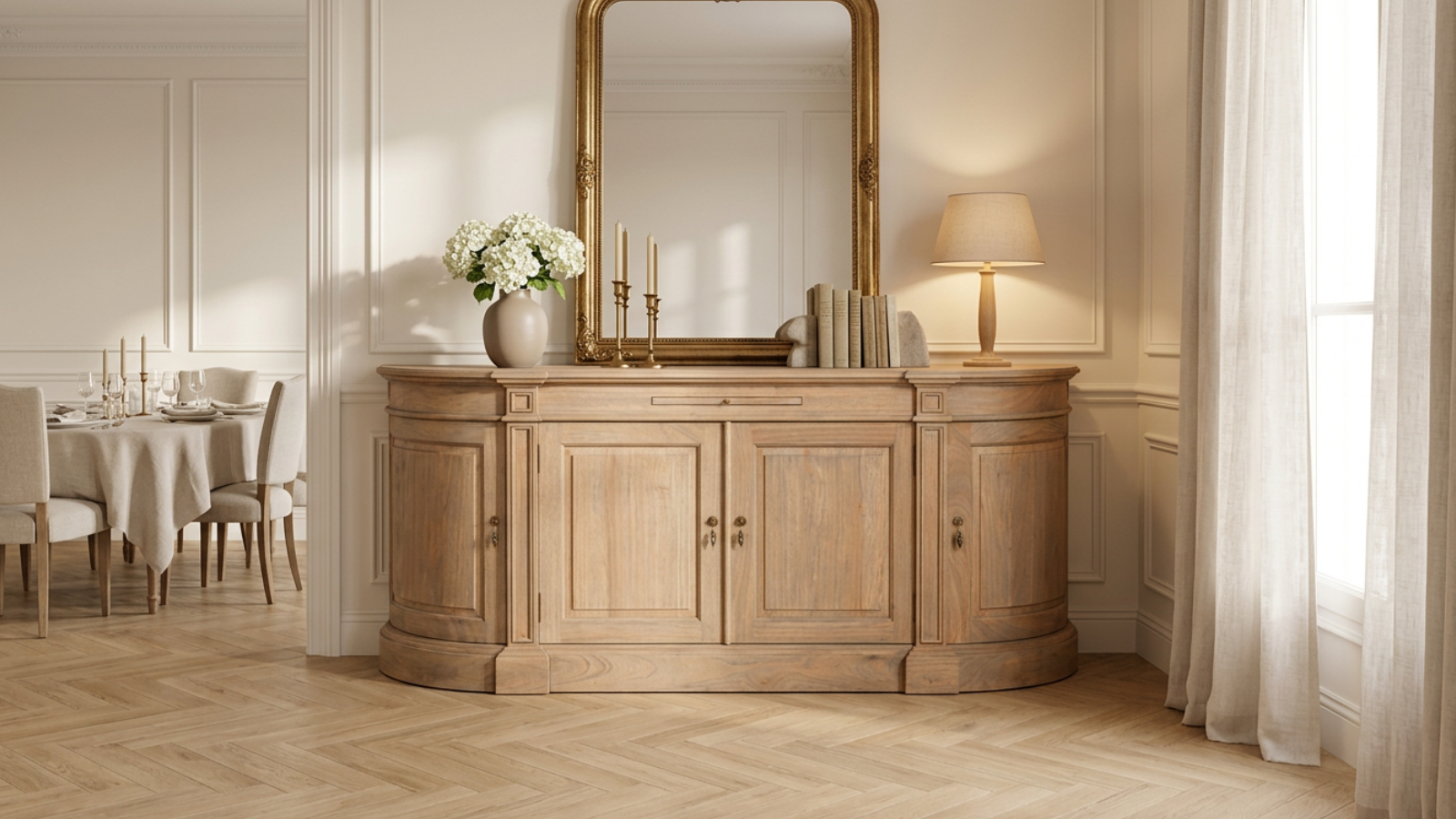
A beautifully chosen sideboard is one of the most versatile pieces of furniture you can introduce into your home. While traditionally associated with dining rooms, today's sideboards offer far more than practical storage. They provide an opportunity to display treasured decorative objects, organise everyday essentials and create a striking focal point that enhances the character of almost any room.
Whether positioned beneath a statement mirror in the hallway, used to store dinnerware in the dining room or styled with elegant table lamps in the living room, a thoughtfully selected sideboard combines practicality with timeless design. The right piece should complement your existing furniture, provide useful storage and continue to feel relevant as your home evolves over time.
With so many sizes, materials and styles available, choosing the perfect sideboard can feel overwhelming. Should you select a painted finish or natural wood? Is a large sideboard always the better choice? What is the difference between a sideboard, buffet and credenza? Most importantly, how do you choose a piece that won't simply follow trends but will remain a valued part of your home for years to come?
In this guide, we'll explore everything you need to know before investing in a sideboard. From selecting the correct size and style to understanding how to balance storage with elegant design, you'll discover the timeless principles interior designers use to create beautifully curated interiors that feel both practical and refined.
A well-chosen sideboard combines practical storage with timeless design, helping organise your home while creating a beautiful focal point. This guide explains how to choose the right size, finish and storage configuration to suit your lifestyle and interior.
14 min read.
Why Every Home Benefits from a Sideboard
Few pieces of furniture offer the same balance of practicality and elegance as a well-designed sideboard. While they have traditionally been associated with formal dining rooms, today's sideboards have become one of the most adaptable furniture choices for modern living.
A sideboard can provide valuable concealed storage while creating an opportunity to introduce lighting, artwork, mirrors and carefully chosen decorative accessories that reflect your personal style. Unlike open shelving, it allows everyday items to remain organised behind closed doors while presenting a calm, uncluttered appearance.
This versatility means sideboards are no longer limited to one room. They work equally well in dining rooms, living rooms, hallways and even spacious bedrooms, offering both storage and visual balance wherever they are placed.
Rather than viewing a sideboard simply as another storage cabinet, think of it as a foundation piece—one that anchors a room while allowing the surrounding décor to evolve over time.
What Is the Difference Between a Sideboard, Buffet and Credenza?
One of the most common questions homeowners ask is whether there is any real difference between a sideboard, a buffet and a credenza. While the terms are often used interchangeably, there are subtle distinctions worth understanding.
Sideboards
Traditionally, a sideboard is a freestanding cabinet designed for use in dining rooms. It typically features cupboards, drawers or a combination of both, providing storage for dinnerware, glassware, table linens and serving accessories.
Today, sideboards are used throughout the home and are available in a wide variety of sizes and styles.
Buffets
A buffet performs much the same function as a sideboard but is traditionally slightly taller with shorter legs or a lower profile base. The term is more commonly used in North America, although many UK retailers still use it when describing dining room furniture.
In practice, the distinction is often minimal, and the names are frequently used interchangeably.
Credenzas
Originally found in offices and formal reception rooms, credenzas are generally lower and longer than traditional sideboards. They often feature clean, contemporary lines and are commonly used beneath televisions, artwork or within home offices.
Many modern furniture collections blur the distinction between these three terms, so it is often more helpful to focus on the size, proportions and intended use rather than the label itself.
Editor's Note
Don't become too concerned with whether a piece is described as a sideboard, buffet or credenza. Manufacturers and retailers often use these terms differently. Instead, focus on choosing a beautifully made piece that suits your room, provides the storage you need and complements the character of your home.
Choosing the Right Size Sideboard
One of the biggest mistakes homeowners make is selecting a sideboard based purely on appearance without considering how it relates to the proportions of the room.
A sideboard should feel substantial enough to anchor the wall it occupies while leaving sufficient breathing space around it. Furniture that is too small can appear insignificant, while an oversized sideboard may dominate the room and restrict movement.
Measure the Available Wall
Before shopping, carefully measure the wall where the sideboard will sit.
Remember to account for:
- Door openings.
- Walkways.
- Radiators.
- Light switches.
- Existing furniture.
- Skirting boards.
Leaving generous space on either side of the sideboard creates a calmer and more balanced composition. A perfect example is our Geneviève Large Aged Ivory Sideboard with 4 Doors, 4 Drawers & Ornate Detailing.
Consider Ceiling Height
Large sideboards naturally carry greater visual weight.
In rooms with lower ceilings, choosing a slightly lighter design with elegant legs or refined detailing can help the space feel more open.
Conversely, larger rooms with higher ceilings often benefit from substantial sideboards that provide stronger visual presence.
Think About Everyday Practicality
A sideboard should enhance the way you live.
Consider:
- How often cupboard doors will be opened.
- Whether drawers need to fully extend.
- Access around dining chairs.
- Space for decorative styling.
The most successful furniture balances beauty with practicality rather than prioritising one over the other.
Should You Choose a Two-Door, Three-Door or Four-Door Sideboard?
One of the easiest ways to narrow your search is by considering how much storage you genuinely need. While sideboards are available in a wide variety of sizes, most fall into three common layouts: two-door, three-door and four-door designs.
The right choice depends not only on the size of your room but also on how you intend to use the furniture every day.
Two-Door Sideboards
Two-door sideboards are ideal for smaller homes and compact rooms where space is limited but additional storage is still required.
They work particularly well in:
- Hallways.
- Apartments.
- Breakfast rooms.
- Smaller dining rooms.
- Living rooms.
- Home offices.
Despite their smaller footprint, they still provide generous concealed storage while leaving enough wall space for artwork, mirrors or decorative lighting.
If your goal is to introduce practical storage without overwhelming the room, a two-door sideboard is often the most balanced solution. as showcased by our Camille White Baroque 2 Door Sideboard
Three-Door Sideboards
Three-door sideboards offer perhaps the greatest versatility.
They provide significantly more storage than smaller cabinets while remaining proportionate in the majority of UK homes.
This makes them particularly suitable for:
- Family dining rooms.
- Open-plan living spaces.
- Larger hallways.
- Everyday household storage.
For many homeowners, a three-door sideboard strikes the ideal balance between practicality and visual proportion, making it one of the most popular choices for modern interiors.
Four-Door Sideboards
Four-door sideboards create an impressive focal point while delivering exceptional storage capacity.
They are best suited to:
- Large dining rooms.
- Open-plan kitchens.
- Spacious living areas.
- Period properties.
- Homes that regularly entertain.
Their generous proportions make them ideal for storing extensive dinnerware collections, entertaining accessories and seasonal items while providing a substantial surface for styling.
Because of their size, ensure there is enough surrounding space for the furniture to breathe. A large sideboard should enhance the room rather than dominate it. Discover our Camille Four Door Mirrored Sideboard.
Consider Your Future Needs
When choosing between different sideboard sizes, think beyond your immediate storage requirements.
Ask yourself:
- Will your household grow?
- Do you regularly entertain guests?
- Are you likely to accumulate additional dinnerware or decorative accessories?
- Could the sideboard eventually be used in another room?
Choosing slightly more storage than you currently require often proves more practical than quickly outgrowing a smaller cabinet.
✦ Maison Jahvauns Editor's Note
The best sideboard isn't necessarily the largest one. It's the piece that feels perfectly proportioned to your room while providing exactly the amount of storage you need. Well-balanced furniture always feels more luxurious than furniture chosen simply for its size.
Wood, Painted or Mirrored? Choosing the Right Finish
The finish of your sideboard influences far more than its appearance. It affects how the furniture interacts with natural light, complements surrounding pieces and contributes to the overall atmosphere of the room.
Rather than choosing a finish based purely on current trends, consider how it will sit within your home over the coming years. Timeless interiors are built around materials that age gracefully and continue to feel relevant as décor evolves.
Natural Wood Sideboards
Natural wood remains one of the most enduring choices for sideboards thanks to its warmth, character and versatility.
Every timber possesses its own grain and tonal variation, giving each piece a unique personality while adding natural texture to the room.
Natural wood sideboards work particularly well in:
- Dining rooms.
- Living rooms.
- Hallways.
- Traditional interiors.
- Modern classic homes.
- Parisian-inspired spaces.
If you love the visual presence of a sideboard but don't require as much concealed storage, a console table can provide a lighter alternative. Our guide to How to Style a Console Table Like an Interior Designer explains how to turn one into a considered focal point using mirrors, lighting and decorative accessories.
They also pair effortlessly with stone, linen, brass and upholstered furniture, making them one of the easiest finishes to integrate into an evolving interior. Discover our Théodore Wooden Fluted Buffet Sideboard.
Painted Sideboards
Painted finishes introduce softness and elegance while allowing architectural details such as mouldings, panelling and decorative hardware to become more prominent.
Neutral shades remain the most timeless choice.
Consider:
- Soft ivory.
- Warm white.
- Stone.
- Taupe.
- Mushroom.
- Light sage.
These colours create a calm backdrop that allows decorative styling to take centre stage without dominating the room.
Mirrored Sideboards
Mirrored sideboards can be particularly effective in smaller or darker rooms because they reflect both natural and artificial light.
When used thoughtfully, they introduce a subtle sense of luxury while helping a room feel brighter and more spacious.
Rather than becoming the focal point themselves, mirrored furniture works best when balanced with softer materials such as timber, natural fabrics and understated accessories.
✦ Maison Jahvauns Editor's Note
Choosing a timeless finish doesn't mean avoiding personality. Instead, think about selecting materials that become more beautiful as they age and continue to complement your home as your style naturally evolves.
Where Should You Place a Sideboard?
Although sideboards are traditionally associated with dining rooms, their versatility allows them to enhance almost every area of the home.
The key is understanding the role the furniture will play within each space.
Dining Room
The dining room remains the natural home for a sideboard.
It provides practical storage for:
- Dinnerware.
- Glassware.
- Cutlery.
- Table linens.
- Serving accessories.
- Seasonal decorations.
Its surface also offers the perfect opportunity to introduce elegant lighting, artwork and decorative styling that enhances the room without reducing everyday functionality.
When paired with a beautifully proportioned dining table and timeless dining chairs, a sideboard helps create a complete dining arrangement that feels balanced and considered.
Living Room
Within a living room, a sideboard becomes both a storage solution and an opportunity to display personal collections.
It can be used beneath artwork or a large mirror while concealing board games, books, media accessories and other everyday essentials behind closed doors.
This balance between open display and concealed storage helps maintain the calm, uncluttered appearance associated with luxury interiors.
While sideboards provide elegant storage throughout the home, hidden TV cabinets offer a specialised solution for living rooms by concealing modern technology without compromising timeless design. Discover how they compare in our guide to Hidden TV Cabinets: The Luxury Living Room Explained.
Just as a sideboard provides elegant storage around the room, a thoughtfully chosen coffee table helps anchor the seating area while introducing another opportunity for timeless styling. Explore our guide to How to Choose the Perfect Coffee Table for Your Living Room.
Hallway
A hallway sideboard immediately creates a welcoming first impression.
Styled with a statement mirror, elegant table lamp and carefully selected decorative objects, it transforms an often-overlooked area into one of the most inviting spaces within the home.
Practical storage for keys, post and everyday essentials further increases its value.
Bedroom
Larger bedrooms can also benefit from a sideboard.
Whether positioned beneath artwork or used as an alternative to a traditional chest of drawers, it provides generous concealed storage while contributing to a more layered and sophisticated interior.
Rather than relying solely on matching bedroom furniture, introducing a sideboard can create a more curated, collected-over-time aesthetic.
Choosing Storage That Works for Your Lifestyle
A beautiful sideboard should support the way you live just as effectively as it enhances your home.
Before choosing a particular design, think carefully about what you actually intend to store.
Cupboards
Cupboards offer concealed storage for larger household items while maintaining a clean appearance.
Ideal for storing:
- Serving dishes.
- Small appliances.
- Decorative accessories.
- Storage baskets.
- Board games.
- Seasonal items.
Adjustable shelving provides additional flexibility as your storage needs change.
Drawers
Drawers are particularly useful for organising smaller items.
They work well for:
- Cutlery.
- Candles.
- Table linen.
- Stationery.
- Chargers.
- Household essentials.
Soft-close mechanisms add both practicality and a greater sense of quality.
Open Shelving
Some contemporary sideboards combine concealed cupboards with open shelving.
This arrangement allows decorative styling while keeping everyday clutter hidden.
However, open shelving requires greater discipline.
Rather than filling every available space, display only a small collection of carefully chosen objects to preserve a calm, elegant appearance.
✦ Maison Jahvauns Editor's Note
The most beautiful storage is often the storage you don't notice. A thoughtfully designed sideboard should quietly organise everyday life while allowing the room itself to remain the centre of attention.
How to Style a Sideboard Like an Interior Designer
A sideboard provides one of the most rewarding styling opportunities within the home.
Unlike a coffee table, which must remain practical for everyday use, or a dining table, which is frequently cleared for meals, a sideboard offers a more permanent canvas for creating visual interest.
The goal is not to fill every inch of the surface, but to create balance through carefully selected objects that vary in height, texture and scale. A timeless example is our Anaïs White Painted Mirrored Four Door Breakfront Sideboard.
Start with Height
Every well-styled sideboard benefits from a strong vertical element.
Consider using:
- A large framed artwork.
- An oversized mirror.
- A statement table lamp.
- Tall branches in a ceramic vase.
These pieces establish a focal point while drawing the eye upwards.
Layer Decorative Objects
Professional interior designers rarely place accessories in straight lines.
Instead, they overlap objects slightly to create depth and a more natural appearance.
Try combining:
- Stacked coffee table books.
- Sculptural objects.
- Ceramic vases.
- Candlesticks.
- Decorative trays.
Layering creates visual richness without making the arrangement feel cluttered.
Introduce Natural Texture
Mixing materials prevents styling from appearing flat.
Combine:
- Timber.
- Marble.
- Glass.
- Linen.
- Woven baskets.
- Brass accents.
The contrast between these textures creates warmth and sophistication.
Leave Empty Space
Perhaps the most overlooked styling principle is knowing when to stop.
Luxury interiors rarely fill every available surface.
Leaving intentional empty space allows each decorative object to stand out while creating the calm, refined atmosphere associated with timeless homes.
✦ Maison Jahvauns Editor's Note
A beautifully styled sideboard isn't about owning more decorative objects. It's about selecting fewer, better pieces and giving each one the space to be appreciated.
Common Sideboard Buying Mistakes
A sideboard is a long-term investment that should continue to serve your home for many years. Avoiding a handful of common mistakes can make the difference between a piece that simply fills a wall and one that becomes an integral part of your interior.
Choosing a Sideboard That's Too Small
One of the most common mistakes is selecting a sideboard that is undersized for the wall it occupies.
A small cabinet placed against a long empty wall often feels isolated and lacks presence. Instead, choose proportions that comfortably anchor the space while still allowing breathing room on either side.
A wall mirror can provide the vertical focal point needed to balance the horizontal proportions of a sideboard while also helping reflect light around the room. Our guide to How to Choose the Perfect Wall Mirror for Every Room explains how to select the right size, shape, finish and placement.
If the room is particularly spacious, consider balancing the sideboard with artwork, mirrors or lighting rather than relying on the furniture alone.
Prioritising Storage Over Design
Storage is important, but a sideboard should also contribute to the overall character of the room.
Choosing the largest cabinet simply because it offers more cupboards can leave the space feeling heavy or overcrowded.
Instead, look for furniture that combines generous storage with elegant proportions and refined craftsmanship.
Ignoring the Furniture Around It
A sideboard should never feel disconnected from the rest of the room.
Consider how it relates to:
- The dining table.
- Dining chairs.
- Display cabinets.
- Coffee tables.
- Flooring.
- Lighting.
- Wall finishes.
The most successful interiors create harmony by repeating complementary materials, colours and proportions throughout the room.
Overstyling the Surface
Many homeowners feel every available surface needs decorating.
In reality, restraint is often what creates the greatest sense of luxury.
Rather than filling the entire top with ornaments, select a few meaningful decorative pieces and allow empty space to become part of the overall composition.
A table lamp can also give the sideboard a second life after sunset, illuminating the furniture and decorative objects while contributing to the wider atmosphere of the room. Discover how to combine it with other sources in How to Layer Living Room Lighting Like an Interior Designer.
Buying for Today's Trends
Furniture should outlast trends.
Highly fashionable finishes, oversized hardware or unusual colour combinations may feel exciting initially but can become difficult to integrate as your home evolves.
Timeless materials, quality construction and balanced proportions remain the safest long-term investment.
Frequently Asked Questions
What is the difference between a sideboard and a buffet?
The two terms are often used interchangeably. Traditionally, a buffet is slightly taller and more commonly associated with North American furniture, while a sideboard is the term more frequently used in the UK. In practice, both provide similar storage and serve the same purpose.
Where should a sideboard be placed?
Sideboards are most commonly positioned in dining rooms, but they also work beautifully in living rooms, hallways and larger bedrooms where additional storage and display space are needed.
How high should a sideboard be?
Most sideboards are designed to sit at a comfortable height for both storage and styling. The exact dimensions vary, but the furniture should feel proportionate to the room and surrounding pieces rather than dominating the space.
Should a sideboard match the dining table?
Not necessarily. A sideboard should complement the dining table through similar materials, colours or proportions rather than matching it exactly. A carefully coordinated interior often feels more natural than one where every piece is identical.
How do you style a sideboard?
Start with one larger focal point such as artwork, a mirror or a table lamp before layering decorative objects of varying heights. Introduce natural textures, repeat complementary materials and leave intentional empty space to create a calm, balanced arrangement.
What should you store inside a sideboard?
Sideboards are ideal for storing dinnerware, glassware, table linens, serving dishes, candles, household essentials and other items you want to keep organised but out of sight.
Can a sideboard be used in a living room?
Absolutely. A sideboard provides concealed storage while creating an elegant surface for displaying artwork, lighting, books and decorative accessories, making it one of the most versatile pieces of furniture in the home.
How do I choose the right size sideboard?
Measure the available wall space carefully, allowing room for walkways and nearby furniture. The sideboard should feel substantial enough to anchor the room while leaving sufficient space around it to maintain balanced proportions.
Conclusion
A thoughtfully chosen sideboard is much more than a practical storage cabinet. It has the ability to organise everyday life while introducing elegance, warmth and balance into almost any room of the home.
Whether placed within a dining room, hallway, living room or bedroom, the right sideboard should complement its surroundings through quality craftsmanship, timeless materials and carefully considered proportions. By focusing on furniture that balances beauty with functionality, you'll create an interior that feels both refined and effortlessly liveable.
Rather than following passing trends, invest in a sideboard that reflects the way you live today while remaining versatile enough to evolve alongside your home for years to come. Timeless furniture isn't defined by fashion—it is defined by quality, thoughtful design and enduring appeal.
Editorial Standards
Written by Shackeem — Founder & Furniture Curator, Maison Jahvauns
Maison Jahvauns was founded with a simple belief: exceptional furniture should be timeless, thoughtfully curated and designed to elevate the way we live. Every collection is personally selected by Shackeem, with a focus on refined craftsmanship, elegant proportions and enduring design inspired by Parisian interiors.
The Jahvauns Journal reflects the same philosophy. Every guide is written to help homeowners make informed furniture and interior design decisions through practical advice, timeless styling principles and carefully researched buying guidance. Rather than following short-lived trends, our articles are created to inspire elegant homes that remain beautiful for years to come.
Our Editorial Promise
Every article published in the Jahvauns Journal is independently written by Maison Jahvauns and reviewed for accuracy before publication. Our recommendations are based on timeless design principles, thoughtful furniture curation and a commitment to helping readers create refined interiors with confidence.
We regularly review and update our editorial content to ensure it remains relevant, accurate and valuable for our readers.
Last updated: 17 August 2026
Part of the Maison Jahvauns Journal — Curated guides for timeless interiors.
Continue Exploring Maison Jahvauns
Explore Our Sideboards Collection
Discover our carefully curated collection of timeless sideboards, selected for their exceptional craftsmanship, elegant storage solutions and enduring design.
Choosing the Perfect Dining Table
A beautifully proportioned sideboard works best alongside a thoughtfully chosen dining table. Discover how round and oval dining tables each offer unique advantages depending on your space, lifestyle and entertaining needs.
Read Round vs Oval Dining Tables
How to Choose Dining Chairs That Never Go Out of Style
Complete your dining room with dining chairs that combine comfort, craftsmanship and timeless design. Learn how to select seating that complements both your table and your interior.
Explore the Maison Jahvauns Lookbook
Browse beautifully curated interiors, elegant furniture collections and timeless styling inspiration to help you create refined living spaces throughout your home.
Trade & Commercial Projects
Maison Jahvauns works with interior designers, property developers, home staging companies and hospitality businesses, offering tailored quotations, curated furniture recommendations and personalised project support.