
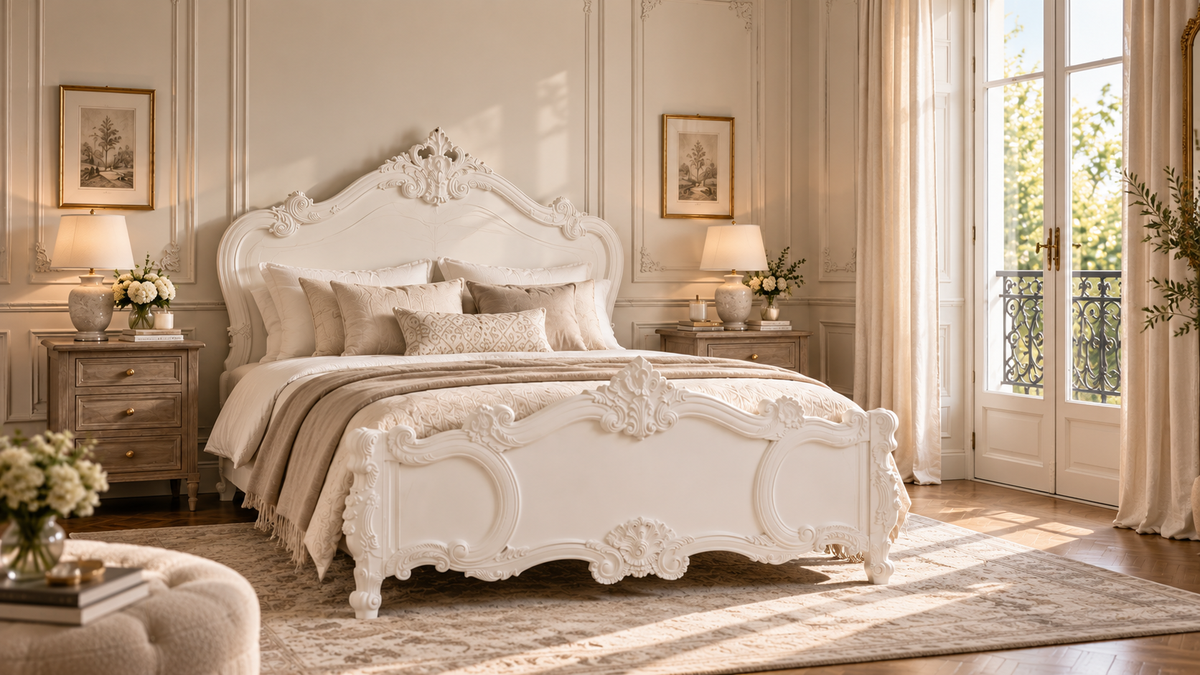
A luxurious bedroom is not necessarily the largest room in the house, nor the one filled with the most expensive furniture.
Some of the most beautiful bedrooms are remarkably restrained. A well-proportioned bed, thoughtfully positioned furniture, beautiful natural materials and carefully layered lighting can create a greater sense of luxury than an abundance of decorative objects.
The difference lies in how everything works together.
A bedroom should feel considered without appearing overly arranged. It should provide comfort without sacrificing elegance, and its furniture should retain its appeal long after the latest interior design trend has passed.
This is the foundation of timeless bedroom design.
At Maison Jahvauns, we believe the most enduring interiors are built around proportion, craftsmanship and the quiet confidence of furniture that does not need to compete for attention.
The objective is not to recreate a hotel suite or follow a particular aesthetic too literally. It is to create a bedroom that feels personal, beautifully balanced and genuinely comfortable to live in.
How Do You Create a Timeless Luxury Bedroom?
To create a timeless luxury bedroom, begin with a well-proportioned bed and a calm, cohesive colour palette. Choose quality furniture with enduring shapes, layer natural materials and soft textiles, and use ambient, task and accent lighting to create warmth. Keep surfaces uncluttered, allow comfortable space around furniture and introduce personal details that make the room feel considered rather than overly decorated.
Reading time: 18 minutes
Begin With a Feeling, Not a Furniture List
Before choosing a bed, wardrobe or bedside table, consider how you want the bedroom to feel.
Calm?
Warm?
Elegant?
Romantic?
Understated?
A bedroom designed around a clear atmosphere is often more successful than one assembled through individual purchases.
For example, a bedroom intended to feel serene might combine pale natural wood, soft linen, warm ivory walls and restrained brass accents.
A more traditional room could introduce a carved bed, painted furniture, decorative wall mouldings and an antique-inspired mirror.
Both can feel luxurious.
The difference is not the number of decorative features, but the consistency of the overall composition.
Try defining the room through three qualities before making any major decisions.
For a Maison Jahvauns-inspired bedroom, these might be:
Calm. Refined. Timeless.
These words become a useful filter when deciding whether a new piece belongs in the room.
If it does not support the atmosphere you are trying to create, it may not be necessary.
Choose a Bed That Establishes the Room's Character
The bed is usually the most important visual element in the bedroom.
Its proportions, headboard, material and silhouette establish the foundation for everything around it.
A low upholstered bed can create a quiet, contemporary atmosphere.
A carved wooden bed introduces decorative character and a stronger sense of tradition.
A design such as the Rosalie French Rococo King Size Bed Frame in Light Painted White demonstrates how hand-carved detailing and an elegant traditional silhouette can give the bedroom a distinctive focal point while allowing the surrounding furniture to remain understated.
A generously proportioned headboard can provide architectural presence without requiring additional artwork above it.
The most important consideration is the relationship between the bed and the room.
If you're still deciding which bed will suit your space, How to Choose the Perfect Bed for Your Bedroom explores bed dimensions, frame styles, headboard proportions and placement in greater detail.
A large decorative bed may look beautiful in a spacious bedroom but overwhelm a smaller one.
Equally, a very low, understated bed may feel visually insignificant beneath high ceilings and elaborate architectural mouldings.
The aim is to choose a bed with enough presence to anchor the room without dominating it.
Consider the Complete Bed Frame
When comparing beds, look beyond mattress dimensions.
A decorative headboard, substantial footboard or projecting frame can increase the overall footprint considerably.
These details also influence how much surrounding space the bed needs.
The most elegant arrangement is not necessarily the one containing the largest possible bed.
It is the one in which the bed feels naturally proportioned to the architecture.
Maison Jahvauns Editor's Note
One of the simplest ways to make a bedroom feel more luxurious is to allow the bed to have a clear visual role. A beautifully detailed headboard often needs less decoration around it, not more. Give the furniture enough space to be appreciated.
Build a Colour Palette That Can Evolve
Timeless interiors do not have to be entirely neutral.
However, a considered palette makes it easier to introduce new textiles, furniture and decorative details without repeatedly redesigning the room.
Warm ivory, stone, taupe, soft grey and natural wood tones can create an adaptable foundation.
Deeper shades such as forest green, muted burgundy, chocolate brown or charcoal can introduce richness through smaller elements.
The key is restraint.
Rather than combining many competing colours, establish a principal palette and allow a few carefully selected accents to provide depth.
Warm Neutrals Create a Softer Foundation
A bedroom decorated exclusively in stark white can sometimes feel cold.
Warm neutrals introduce a more inviting atmosphere.
Consider the relationship between:
-
ivory walls
-
cream bedding
-
taupe upholstery
-
natural timber
-
aged brass
-
soft brown or muted grey accents
These colours do not need to match exactly.
Small variations in tone help create depth and prevent the room from appearing flat.
Use Darker Colours Deliberately
Darker colours can be exceptionally elegant in bedrooms.
A deep painted wall, richly coloured upholstered chair or dark wood wardrobe can create a sense of intimacy.
However, darker pieces carry more visual weight.
Balance them with lighter textiles, considered lighting and enough surrounding space.
The goal is not to avoid contrast, but to control it.
Prioritise Natural Materials and Beautiful Finishes
Materials contribute enormously to how luxurious a bedroom feels.
Natural wood introduces warmth and variation.
Linen brings softness and texture.
Velvet can provide depth and a gentle richness.
Wool rugs introduce comfort underfoot.
Painted timber and antique-inspired finishes can lend traditional character.
A successful bedroom often combines several materials rather than relying on one finish throughout.
For example:
painted wooden bed + natural wood bedside tables + linen bedding + brass lighting
This creates a layered composition without requiring excessive decoration.
Let Wood Grain Remain Visible
Natural timber has a character that uniform synthetic-looking finishes cannot always reproduce.
Visible grain, subtle tonal variation and carefully considered construction can make even relatively simple furniture feel distinctive.
The colour of the wood should also work with the surrounding palette.
Pale oak and washed timber often suit lighter bedrooms.
Darker woods can provide contrast and a more traditional atmosphere.
Neither is inherently more luxurious.
The quality of the relationship matters more than the particular shade.
Use Decorative Finishes Sparingly
Mirrored furniture, carved detailing and metallic accents can all introduce elegance.
But combining too many decorative finishes may make the room feel visually busy.
If the bed is highly ornate, quieter bedside furniture may help balance it.
If the wardrobe has substantial decorative detailing, allow surrounding pieces to be more restrained.
Luxury often comes from giving one or two distinctive materials the opportunity to stand out.
Create a Bedroom Layout That Feels Effortless
Even beautiful furniture can feel uncomfortable when the room has been arranged poorly.
Begin with the bed.
Then consider where bedside tables, wardrobes, dressing furniture and any seating will sit.
Protect the routes you naturally use between these pieces.
A wardrobe should have enough clearance for its doors to open.
A dressing table should allow a stool or chair to pull out comfortably.
Bedside tables should remain accessible without making the space beside the bed feel restricted.
Avoid placing furniture purely to fill empty walls.
The best layouts balance function with visual composition.
For a more detailed approach to positioning furniture throughout the room, How to Arrange Bedroom Furniture for a Balanced, Elegant Room explains how to establish a focal point, maintain comfortable circulation and balance beds, wardrobes, bedside tables and dressing furniture.
Leave Space Around Important Furniture
Visible floor and wall space can make furniture feel more substantial.
A decorative bed becomes easier to appreciate when its headboard and footboard are not crowded.
A freestanding armoire feels more intentional when its silhouette is visible.
A dressing table becomes more inviting when it has enough room for comfortable seating.
This is particularly important in traditionally styled bedrooms, where furniture often contains carving, shaped edges or decorative detailing.
Balance the Room Without Forcing Symmetry
Matching bedside tables can create an elegant sense of order.
But symmetry is not compulsory.
A room may have an off-centre window, an alcove or an awkward doorway that makes identical arrangements impractical.
In these situations, focus on visual weight.
A floor lamp may balance a bedside table.
A substantial mirror can counter the presence of a wardrobe.
A dressing table can create a secondary focal point opposite the bed.
A balanced bedroom does not require every element to be duplicated.
Choose Bedside Tables That Complement the Bed
Bedside tables are among the most frequently used pieces of bedroom furniture.
They should therefore provide practical support as well as visual balance.
Consider their height relative to the mattress.
A surface positioned comfortably near mattress height is generally easier to use than one considerably above or below it.
Width also matters.
A narrow bedside table may suit a compact bedroom, while a larger bed can often accommodate more substantial furniture.
Storage should reflect your habits.
Drawers are useful for keeping everyday essentials out of sight.
An open shelf may suit books or a decorative basket.
A simple table can work where little storage is required.
If you're comparing different bedside table designs, How to Choose the Perfect Bedside Table for Your Bedroom provides detailed guidance on height, width, storage, materials and proportion.
Avoid Overly Coordinated Furniture
Buying every piece from the same furniture collection can create continuity, particularly in traditional interiors.
But a bedroom can feel more personal when furniture has been thoughtfully combined.
A painted bed might sit beautifully beside natural wooden tables.
A substantial upholstered headboard can be balanced by slender furniture.
The important relationships are proportion, colour, material and design character.
Furniture should feel connected rather than necessarily identical.
Introduce Storage Without Making the Bedroom Feel Heavy
Storage is essential to maintaining a calm bedroom.
Without it, even an elegantly furnished space can become visually cluttered.
A wardrobe should be selected around the belongings it needs to accommodate.
Consider hanging space, shelving, drawers and accessibility.
A large wardrobe with poorly configured storage may be less useful than a smaller design that suits your belongings.
Its external proportions also matter.
Tall wardrobes can create considerable visual weight, especially in smaller bedrooms.
For more detailed guidance on choosing practical storage without overwhelming the room, How to Choose the Perfect Wardrobe for Your Bedroom explores wardrobe dimensions, internal configuration, door styles and placement.
Use Concealed Storage to Preserve Calm
Not everything needs to remain visible.
Closed drawers and cupboards allow everyday objects to be stored conveniently without becoming part of the decorative composition.
This is especially useful for:
-
clothing
-
accessories
-
chargers
-
personal items
-
spare bedding
-
smaller everyday essentials
The aim is not to create a room without possessions.
It is to ensure those possessions have somewhere appropriate to belong.
Let Storage Furniture Contribute to the Design
A wardrobe does not have to be purely functional.
A beautifully proportioned armoire can become a defining feature of the bedroom.
Mirrored doors may introduce light and depth.
Painted finishes can soften the presence of substantial furniture.
Carved details can complement a traditionally styled bed.
The Élodie White Mirrored Double Door Armoire Wardrobe brings these qualities together, combining a traditional painted silhouette with mirrored doors that can introduce light and a sense of depth while providing substantial bedroom storage.
The strongest storage pieces combine practical usefulness with enduring design.
Create a Dressing Area That Feels Considered
A dressing table can introduce a more personal layer to the bedroom.
It provides a dedicated place for getting ready while creating a secondary furniture composition away from the bed.
Where possible, position it near natural light.
Consider the relationship between the table, mirror, seating and surrounding space.
A compact upholstered stool can add softness without occupying too much room.
A wall mirror can provide visual presence while leaving the tabletop free.
And drawers can help keep smaller belongings organised.
If you're planning a dedicated getting-ready area, How to Choose the Perfect Dressing Table for Your Bedroom explains how to compare table dimensions, storage, seating, mirrors, lighting and placement.
Keep the Dressing Table Surface Restrained
A dressing table does not need to display every perfume bottle, accessory or decorative object.
Choose a small number of useful or meaningful pieces.
A shallow tray can group smaller items.
A ceramic vase can introduce softness.
A carefully positioned lamp may provide additional light.
Leave enough clear surface for the table to remain practical.
A dressing area should feel elegant because it works effortlessly, not because it has been decorated extensively.
Layer Bedroom Lighting for Warmth and Atmosphere
Lighting has a profound influence on the character of a bedroom.
A single ceiling light rarely creates the same sense of depth as several carefully positioned light sources.
Think about three layers:
Ambient lighting provides general illumination.
Task lighting supports reading, dressing and everyday activities.
Accent lighting introduces atmosphere and highlights particular features.
A chandelier or pendant may provide the principal decorative light.
Bedside lamps support reading and evening routines.
Wall lights can frame a headboard.
A floor lamp can soften a quiet corner.
The most successful schemes allow different lights to be used independently.
Choose Warm, Comfortable Light
Bedrooms generally benefit from warm-toned lighting rather than harsh, cool illumination.
For many bedroom lamps, a warm white around 2700K can create a comfortable evening atmosphere, while suitable task lighting may be brighter where needed.
Dimmers are particularly useful because they allow the room to transition from practical daytime use to a more restful evening setting.
Consider Lamps as Part of the Furniture Composition
A bedside lamp should relate to the scale of the table and bed.
A very small lamp may feel insignificant beside a tall headboard.
An oversized lamp can overwhelm a narrow bedside surface.
The lamp's shape, material and shade also contribute to the wider bedroom palette.
Lighting should be functional, but it should also feel integrated into the room.
Dress the Bed With Layers, Not Excess
Beautiful bedding is one of the simplest ways to make a bedroom feel inviting.
Begin with quality bed linen in colours that complement the room.
Then introduce texture through a throw, quilt or carefully selected cushions.
The goal is depth rather than volume.
An excessive number of decorative pillows can make the bed look staged and become inconvenient during everyday use.
A more restrained arrangement often feels calmer.
Combine Different Textures
Consider pairing:
-
crisp cotton bedding
-
soft linen
-
a lightly textured quilt
-
a wool or cotton throw
-
one or two decorative cushions
These materials create visual interest even when the colours are closely related.
The subtle differences in texture help the bed feel layered without introducing unnecessary pattern.
Let the Headboard Remain Visible
If the bed has an ornate or beautifully shaped headboard, avoid obscuring it entirely with oversized pillows.
The headboard is part of the furniture's design.
Allow its proportions and detailing to contribute to the room.
Use Rugs to Add Comfort and Structure
A rug can make a bedroom feel softer and more complete.
It can also help visually connect the bed with the surrounding furniture.
A generously sized rug positioned partly beneath the bed often creates a more cohesive composition than a very small rug floating at its foot.
However, the correct size depends on the room and bed dimensions.
The rug should extend far enough into the surrounding space to feel intentional.
In a larger bedroom, a separate rug may also help define a seating area.
Choose materials and textures appropriate for the room's level of use and maintenance requirements.
Introduce Mirrors to Reflect Light and Create Depth
Mirrors can make a bedroom feel more open while adding decorative character.
A large wall mirror can become a focal point above a dressing table.
A freestanding mirror may create a useful getting-ready area.
Mirrored wardrobe doors can introduce reflections without requiring additional wall furniture.
Consider what the mirror reflects.
A reflection of natural light, architectural mouldings or a beautifully arranged part of the room can strengthen the composition.
A mirror reflecting clutter or an awkward doorway may be less successful.
Choose a Frame That Complements the Furniture
Antique-inspired brass, painted timber and carved frames can all work beautifully in traditional bedrooms.
A simple frame may be more appropriate when surrounding furniture is already decorative.
As with other finishes, the aim is balance rather than repetition.
Make the Bedroom Feel Personal
Timeless design should not produce a room that feels anonymous.
A bedroom should reflect the people who use it.
Artwork, books, meaningful objects and collected pieces can all introduce personality.
The difference between a considered room and a cluttered one is often the way these objects are selected and displayed.
Choose pieces that genuinely matter rather than filling every available surface.
A favourite artwork may have more impact than several generic prints.
A small collection of meaningful objects may feel more personal than a large assortment of decorative accessories.
This principle is particularly valuable beside the bed, where decorative objects need to coexist with everyday essentials. How to Style a Bedside Table Without Creating Clutter explores how to combine lamps, books, trays and personal details while preserving a calm, practical surface.
The room should tell a quiet story without becoming visually overwhelming.
Bring in Parisian Character Without Creating a Theme
Parisian-inspired interiors are often admired for their balance of elegance and informality.
Decorative architecture may sit beside simple furniture.
Antique-inspired pieces can coexist with more contemporary forms.
Materials are layered rather than perfectly matched.
And rooms frequently feel collected over time.
This is a useful philosophy for bedroom design.
You do not need elaborate wall mouldings, an ornate chandelier and matching carved furniture to create a Parisian atmosphere.
Sometimes one beautifully proportioned piece provides enough character.
Mix Decorative and Understated Furniture
An ornate bed can sit alongside restrained bedside tables.
A traditional armoire can complement a simpler upholstered chair.
A carved dressing table may work beautifully beneath a plain wall mirror.
These contrasts prevent the room from feeling overly coordinated.
The objective is not to reproduce a historical interior.
It is to borrow the principles that make such interiors feel enduring.
Maison Jahvauns Editor's Note
The most convincing Parisian-inspired bedrooms rarely look as though every piece was purchased at once. A sense of continuity comes from proportion, materials and restraint, while subtle differences in furniture character make the room feel collected and personal.
Avoid Trends That Require Constant Replacement
Trends can provide inspiration, but they are less useful as the foundation of an entire bedroom.
A highly fashionable colour or decorative finish may feel exciting initially but become tiring when applied to every major furniture piece.
Instead, invest the room's strongest visual decisions in enduring shapes and materials.
Use smaller elements to experiment.
Cushions, throws, artwork and decorative accessories are easier to change than a bed or wardrobe.
This creates a bedroom that can evolve without requiring a complete redesign.
Distinguish Timeless Design From Plain Design
Timeless does not mean featureless.
A sculptural headboard, decorative armoire or beautifully carved dressing table can be highly distinctive and still retain lasting appeal.
The important question is whether the design has a convincing relationship to the room, rather than whether it currently appears fashionable.
Enduring interiors can have personality.
They simply do not depend on novelty for their appeal.
Create a Sense of Luxury in a Small Bedroom
A smaller bedroom can still feel refined.
The key is prioritisation.
Choose a bed that suits the available space.
Preserve comfortable circulation.
Use practical storage to reduce visible clutter.
Select furniture that provides a clear function.
And avoid filling every available wall.
A small bedroom with three well-chosen pieces can feel more luxurious than one containing six pieces that compete for space.
Use Height and Light Carefully
Tall mirrors can draw attention upwards.
Wall lighting may free bedside surface space.
A well-proportioned wardrobe can make better use of vertical storage than several smaller units.
Light colours can create an airy atmosphere, although darker palettes can also work when thoughtfully balanced.
The goal is not to make the room appear artificially large.
It is to make its actual proportions feel comfortable and intentional.
How to Make a Bedroom Look Expensive Without Overspending
A luxurious appearance does not depend entirely on the purchase price of every object.
Several decisions can have a substantial impact without requiring extensive spending.
Focus on the Largest Visual Elements
The bed, walls, curtains and principal furniture establish most of the room's visual character.
Getting these relationships right is often more effective than purchasing numerous smaller accessories.
Keep the Palette Cohesive
A restrained palette helps furniture and textiles feel connected.
Improve the Lighting
Warm, layered lighting can make the room feel more inviting.
Reduce Visible Clutter
Clear surfaces and organised storage allow furniture and architectural details to stand out.
Choose Fewer Decorative Objects
One beautiful mirror or carefully selected lamp can have more impact than many inexpensive accessories.
Pay Attention to Scale
Correctly proportioned furniture often looks more refined than expensive furniture that overwhelms the room.
The guiding principle is simple:
Spend attention before spending money.
Build a Bedroom That Can Evolve Over Time
A timeless bedroom does not need to remain unchanged.
Its strength lies in having a foundation that accommodates change.
You might introduce new bedding.
Replace artwork.
Add a different bedside lamp.
Change the rug.
Or introduce a beautifully chosen piece of furniture as your needs evolve.
When the bed, principal storage and room layout are already well considered, these smaller changes can refresh the space without disrupting its identity.
This is one of the most valuable characteristics of enduring design.
It allows the bedroom to grow with you.
The Maison Jahvauns Principle
True bedroom luxury is created through proportion, comfort and restraint — not the accumulation of expensive objects.
Begin with a bed that belongs in the room.
Choose materials that feel beautiful and enduring.
Layer lighting and textiles to create warmth.
Introduce storage that supports daily life.
Allow furniture to complement rather than compete.
And preserve enough empty space for the room to feel calm.
A bedroom should not need constant redesigning to remain beautiful.
Its elegance should come from the quality of the decisions made at the beginning.
Common Luxury Bedroom Design Mistakes
Buying Matching Furniture Without Considering the Room
A complete matching set can feel coordinated, but it may also make the bedroom appear overly uniform.
Choose pieces according to proportion and function first.
Choosing an Oversized Bed
A substantial bed can provide presence, but not if it compromises circulation and surrounding furniture.
Relying on One Ceiling Light
A single bright light rarely creates the depth and atmosphere associated with a well-designed bedroom.
Using Too Many Decorative Cushions
Excessive bedding accessories can make the room feel staged and inconvenient.
Filling Every Wall and Corner
Empty space is an important part of visual balance.
Mixing Too Many Finishes
Too many competing woods, metals, patterns and decorative surfaces can create visual noise.
Ignoring Practical Storage
A beautiful bedroom quickly loses its calm when everyday belongings have nowhere to go.
Choosing Furniture Purely for Appearance
Comfort, accessibility, storage and ease of use are essential to long-term satisfaction.
Following Every Interior Trend
A bedroom designed around short-lived trends may require frequent changes to maintain its appeal.
Forgetting the View From the Doorway
The first impression of the room should communicate a clear focal point and balanced composition.
Overlooking Curtains and Window Treatments
Poorly considered window coverings can undermine privacy, light control and the overall appearance of the bedroom.
Treating Luxury as a Price Tag
Expensive furniture cannot compensate for uncomfortable proportions, harsh lighting or a poorly organised room.
Frequently Asked Questions
What makes a bedroom look luxurious?
A luxurious bedroom usually combines well-proportioned furniture, a cohesive colour palette, layered lighting, quality textiles, practical storage and restrained decoration. Comfortable circulation and attention to detail are often more important than the number of expensive objects.
How do you create a timeless bedroom?
Choose furniture with enduring silhouettes, use a considered colour palette, prioritise natural materials and arrange the room around comfort and proportion. Introduce trends through smaller accessories rather than making them the foundation of the design.
What colours make a bedroom look luxurious?
Warm ivory, taupe, stone, cream, muted grey and rich natural wood tones can create an elegant foundation. Deeper shades such as forest green, burgundy or chocolate brown can introduce richness when used thoughtfully.
Does luxury bedroom furniture have to match?
No. A bedroom can feel more personal when furniture is coordinated through proportion, colour, material and design character rather than purchased as a matching set.
What is the most important piece of furniture in a bedroom?
The bed is usually the principal focal point and the most important starting point for the room's furniture arrangement.
How do you make a small bedroom feel luxurious?
Choose appropriately scaled furniture, preserve clear circulation, use concealed storage, layer lighting and avoid unnecessary decorative objects. A small room can feel refined when its furniture is carefully selected.
What type of bed looks most luxurious?
There is no single style. Upholstered beds, carved wooden beds and designs with substantial headboards can all feel luxurious when their proportions and materials suit the bedroom.
How do you make a bedroom look expensive on a budget?
Focus on furniture placement, a cohesive palette, warm lighting, well-chosen bedding and reducing clutter. A few carefully selected decorative pieces can be more effective than many inexpensive accessories.
What lighting is best for a luxury bedroom?
A layered scheme combining ambient, task and accent lighting generally provides the most flexibility. Bedside lamps, wall lights, pendants and dimmers can create both practical illumination and a comfortable atmosphere.
Are neutral bedrooms timeless?
Neutral palettes can provide an adaptable foundation, but timeless bedrooms are not limited to pale colours. Richer tones can also endure when used with balanced proportions and quality materials.
Should a luxury bedroom have a dressing table?
Not necessarily. A dressing table can provide a useful getting-ready area and introduce a secondary focal point, but it should only be included when the room has sufficient space and the furniture serves a genuine purpose.
How many decorative pillows should be on a bed?
There is no fixed number. Use enough to create softness and visual balance without obscuring the headboard or making the bed inconvenient to use.
What furniture should be in a luxury bedroom?
Most bedrooms benefit from a well-chosen bed, practical bedside surfaces and suitable clothing storage. Dressing tables, benches and occasional seating can be added where space and daily routines justify them.
How can I make my bedroom feel more Parisian?
Combine elegant proportions, layered materials, restrained decorative details and furniture that feels collected rather than perfectly matched. A carved bed, antique-inspired mirror or beautifully finished armoire can introduce Parisian character without overwhelming the room.
Is an expensive bed necessary for a luxurious bedroom?
No. A bed should be comfortable, appropriately sized and well suited to the room. Its proportions, construction, materials and relationship with the surrounding furniture matter more than price alone.
How often should you redecorate a timeless bedroom?
There is no required schedule. A well-designed bedroom can remain appealing for many years, with occasional updates to bedding, lighting, artwork or accessories as preferences and needs change.
Conclusion
A luxury bedroom that never goes out of style is not created by following a particular trend or filling the room with expensive furniture.
It begins with understanding what makes the space comfortable, balanced and personal.
A well-proportioned bed establishes the focal point.
Beautiful materials introduce warmth and character.
Practical storage preserves calm.
Layered lighting creates atmosphere.
And restrained decoration allows each element to be appreciated.
Perhaps most importantly, a timeless bedroom leaves room for life.
Its furniture supports everyday routines, its layout feels effortless and its character can evolve without losing its identity.
That is the kind of luxury worth creating: a bedroom that feels as beautiful to live in as it is to look at.
Editorial Standards
Written by Shackeem — Founder & Furniture Curator, Maison Jahvauns
Maison Jahvauns was founded with a simple belief: exceptional furniture should be timeless, thoughtfully curated and designed to elevate the way we live. Every collection is personally selected by Shackeem, with a focus on refined craftsmanship, elegant proportions and enduring design inspired by Parisian interiors.
The Jahvauns Journal reflects the same philosophy. Every guide is written to help homeowners make informed furniture and interior design decisions through practical advice, timeless styling principles and carefully researched buying guidance. Rather than following short-lived trends, our articles are created to inspire elegant homes that remain beautiful for years to come.
Our Editorial Promise
Every article published in the Jahvauns Journal is independently written by Maison Jahvauns and reviewed for accuracy before publication. Our recommendations are based on timeless design principles, thoughtful furniture curation and a commitment to helping readers create refined interiors with confidence.
We regularly review and update our editorial content to ensure it remains relevant, accurate and valuable for our readers.
Last updated: 10 October 2026
Part of the Maison Jahvauns Journal — Curated guides for timeless interiors.
Continue Exploring Maison Jahvauns
Creating a timeless bedroom begins with furniture chosen for proportion, comfort and enduring character.
Explore the Bedroom Retreats Collection for our curated selection of beds, bedside tables, wardrobes and complementary bedroom furniture.
For more practical guidance, continue exploring The Jahvauns Journal, where our bedroom furniture buying guides, styling advice and room-planning articles can help you create a home that feels beautifully considered.