
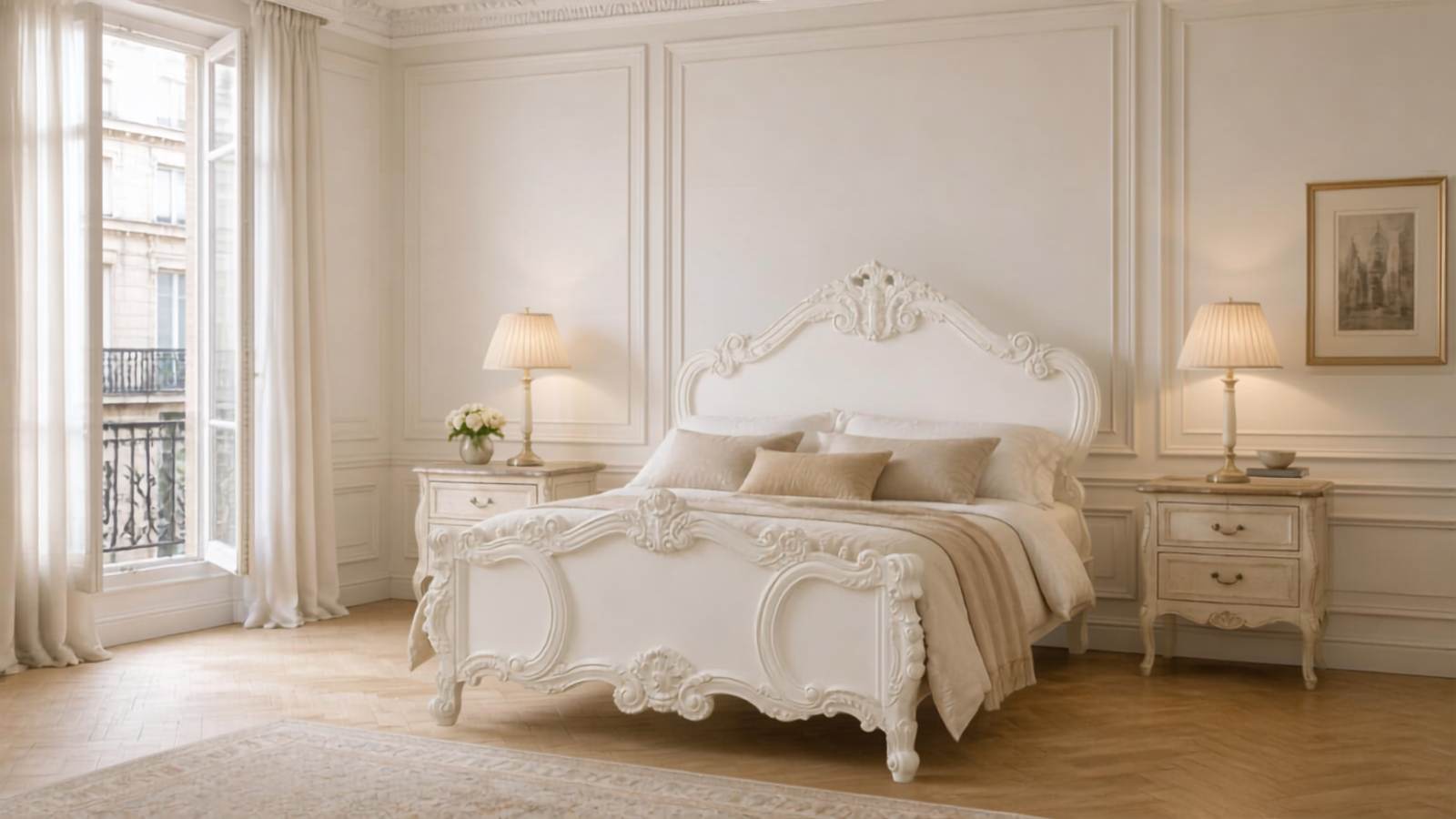
The bed is usually the largest piece of furniture in a bedroom.
It is also the piece around which almost everything else has to work.
Bedside tables are positioned in relation to it. Wardrobes need sufficient clearance around it. Rugs are sized around it. Lighting responds to where the headboard sits. Even the amount of empty floor visible within the room is heavily influenced by the bed's proportions.
Choosing the right bed therefore involves much more than deciding between double, king-size or super king.
A bed can technically fit within a bedroom and still be too large for the space.
A beautiful headboard can become visually overwhelming beneath a low ceiling.
A bed that looks perfectly proportioned in a large showroom can feel substantially different once placed between your own walls, wardrobes and windows.
And reducing the size isn't always the answer either.
A bed that is unnecessarily small can leave a generous bedroom feeling under-furnished and diminish what should naturally be its focal point.
The goal is to find the point where comfort, scale, circulation and visual presence work together.
In this guide, we'll explore how to choose the right bed size for your bedroom, how much space to leave around a bed, the importance of bed and headboard height, different frame styles and materials, where to position the bed and how to make sure your chosen design works with the rest of the furniture in the room.
Choose a bed by measuring the bedroom and allowing sufficient space for comfortable circulation, bedside tables and other furniture. Consider the complete external dimensions of the bed frame rather than mattress size alone, then compare its height, headboard proportions, material and design with the scale of the room.
16 min read
✦ Maison Jahvauns Editor's Note
Never use mattress dimensions alone to decide whether a bed will fit. Decorative frames, upholstered sides, footboards and carved detailing can make the complete bed considerably wider or longer than the mattress it holds. Always plan using the product's full external dimensions.
Start With the Bedroom, Not the Bed
It is tempting to begin by finding a bed you love and then asking whether it will fit.
Reverse that process.
Begin with the room.
Measure:
- The overall width.
- The overall length.
- Ceiling height.
- Door positions.
- Window positions.
- Radiators.
- Alcoves and chimney breasts.
- Built-in wardrobes.
- Freestanding furniture.
- Architectural projections.
Then establish where the bed could realistically sit.
The available floor area doesn't tell the complete story.
A bed may fit between two walls while leaving insufficient room to walk comfortably around it.
It might leave enough circulation but prevent a wardrobe door from opening.
Or its headboard could partially obstruct a window or architectural detail that you want to preserve.
You're therefore not measuring merely for the bed.
You're measuring for the bedroom that needs to exist around it.
Understand Bed Size Versus Bed Frame Size
One of the most important distinctions when buying a bed is the difference between mattress size and overall bed dimensions.
Terms such as double and king-size usually tell you the mattress size the frame is designed to accommodate.
They don't necessarily tell you the complete footprint of the furniture.
Two king-size beds can have exactly the same mattress dimensions while occupying noticeably different amounts of floor space.
An understated frame may extend only modestly beyond the mattress.
A more substantial upholstered, carved or traditional design may have:
- Wider side rails.
- A substantial headboard.
- Decorative posts.
- An extended footboard.
- Carved detailing.
- Projecting mouldings.
This is especially important when shopping for statement furniture.
The very details that give a bed character can also increase its footprint.
Always check the manufacturer's overall width, depth or length and height rather than assuming the mattress measurement represents the complete piece.
What Size Bed Should You Choose?
The largest bed that physically fits isn't automatically the correct bed.
You can compare different proportions, materials and furniture styles throughout our curated Bedroom Retreats collection, which brings together beds and complementary furniture for creating considered sleeping spaces.
Start with your sleeping requirements, then consider how the resulting frame relates to the room.
In UK bedrooms, the most commonly considered sizes include:
Double Bed
A double bed can work particularly well in guest bedrooms, smaller principal bedrooms and spaces where maintaining more floor area is important.
It can also allow room for larger bedside tables or additional bedroom furniture where a king-size bed would make circulation restrictive.
King-Size Bed
A king-size bed provides additional sleeping width and often creates a stronger focal point in a medium or generously sized bedroom.
Because the mattress and frame are larger, consider whether there will still be enough room for bedside furniture and comfortable movement on both sides.
Super King Bed
A super king can create a luxurious sense of scale in a large bedroom, but the surrounding space needs to support it.
Placing a very large bed into a room without sufficient breathing space can have the opposite effect: instead of feeling luxurious, the bedroom begins to feel cramped.
The right question isn't:
“What is the biggest bed I can get into this room?”
It is:
“Which bed size allows the entire bedroom to work beautifully?”
How Much Space Should You Leave Around a Bed?
Comfortable circulation is one of the clearest differences between a bedroom that merely accommodates its furniture and one that feels properly planned.
There isn't one measurement that works for every home.
Period properties, compact bedrooms and unusual architecture often require compromises.
But you should ideally be able to move around the bed naturally without turning sideways or repeatedly navigating around projecting furniture.
Pay particular attention to:
Bed → wall
Bed → bedside table
Bed → wardrobe
Bed → chest of drawers
Bed → bedroom door
The route at the foot of the bed can be especially important if that is the main path through the room.
And remember that furniture moves.
A wardrobe requires space for its doors.
A chest requires room for drawers.
A storage bed may require clearance for its mechanism.
The static floor plan is only the beginning.
Beyond bedside tables and wardrobes, a dressing table can introduce useful storage and a dedicated getting-ready area where space allows. How to Choose the Perfect Dressing Table for Your Bedroom covers dimensions, seating clearance, mirror placement, lighting and positioning within the room.
Measure the Bedside Areas at the Same Time
Don't plan the bed first and discover afterwards that there is nowhere sensible for bedside furniture.
Once you've marked the proposed bed width, look at what remains on either side.
Is there enough room for the bedside tables you want?
Do they fit without touching curtains or radiators?
Can their drawers or doors open?
Are electrical sockets accessible?
Does each side remain comfortable to walk through?
If the remaining space is limited, you may need to choose between:
- A smaller bed.
- Narrower bedside tables.
- Different bedside-table sizes on each side.
- Repositioning another piece of furniture.
This is why bed planning and bedside-table planning should happen together rather than as separate purchases.
Once you've established the available space beside the bed, our guide to How to Choose the Perfect Bedside Table for Your Bedroom explains how to determine the right height, width, storage and proportions for the remaining space.
How Tall Should a Bed Be?
Bed height affects both comfort and the visual proportions of the bedroom.
There is no single correct height because mattresses, frames and individual preferences vary considerably.
A lower bed can create a quieter, more contemporary horizontal line and may make the ceiling appear higher.
A taller bed can have greater presence and may suit more traditional or generously proportioned rooms.
But remember that the frame isn't the finished height.
The mattress contributes substantially to the final sleeping surface.
A deep mattress or topper can transform the proportions of a bed that initially appeared relatively low.
Consider:
frame height + mattress depth = finished bed height.
This finished measurement also influences your bedside tables, lamps and the visual relationship with other furniture.
Pay Particular Attention to the Headboard
The headboard often determines how visually dominant a bed feels.
A relatively simple frame with a substantial headboard can have more presence than a larger bed with a restrained one.
Consider its:
- Height.
- Width.
- Shape.
- Upholstery or material.
- Decorative detailing.
- Relationship with the ceiling.
- Relationship with wall mouldings.
- Position beneath artwork or mirrors.
A tall headboard can look magnificent in a room with generous ceiling height.
The same design placed beneath a low ceiling may feel compressed.
Likewise, an ornate carved headboard requires enough visual space around it for the detailing to be appreciated.
Don't assess the headboard only against the mattress.
Assess it against the wall behind the entire bed.
✦ Maison Jahvauns Editor's Note
When considering a tall or decorative headboard, mark its full width and height directly on the wall with low-tack painter's tape. Then view it from the bedroom doorway. This gives a much more realistic impression of its eventual presence than looking at dimensions on a product page.
Upholstered Beds: Softness and Visual Presence
Upholstered beds introduce softness, texture and comfort.
They can be particularly effective in bedrooms containing harder architectural materials such as timber flooring, mirrors, metal lighting and painted wall mouldings.
Neutral upholstery allows a substantial bed to retain presence without necessarily feeling visually heavy.
But upholstery also adds volume.
Padded headboards and upholstered side rails may extend beyond the mattress considerably, so external measurements remain important.
Think about practicality too.
The fabric's colour, texture and care requirements should suit the way the bedroom is used.
A pale upholstered bed can create a beautifully calm focal point, but material selection should still account for everyday life rather than photography alone.
Wooden Beds: Warmth, Structure and Character
Wooden bed frames can introduce both architectural structure and natural warmth.
The character depends heavily on:
- Timber tone.
- Grain.
- Finish.
- Carving.
- Leg design.
- Headboard shape.
- Overall construction.
A simple pale timber frame can feel quiet and restrained.
A darker or more elaborately carved design can become one of the most decorative pieces in the room.
Wood also provides an opportunity to create relationships with bedside tables, wardrobes and flooring.
Those elements do not need to match exactly.
In fact, slight tonal variation can prevent a bedroom from appearing overly coordinated.
Look for harmony rather than identical finishes.
Choosing the right bed is only one part of creating a beautifully considered bedroom. How to Create a Luxury Bedroom That Never Goes Out of Style explores how bed design, furniture proportions, natural materials, lighting and layered textiles work together to create a timeless interior.
Painted and Decorative Bed Frames
Painted furniture can introduce a softer, more romantic or architectural character depending on the design.
White, ivory and gently aged finishes can work particularly well within bedrooms inspired by French and European interiors.
The lighter finish can also reduce some of the visual weight of a substantial or intricately detailed frame.
Decorative beds, however, need space.
The Rosalie French Rococo King Size Bed Frame in Light Painted White – Hand-Carved Cherub Detailing illustrates this particularly well: its carved detailing and substantial decorative presence are designed to become a focal point, making the surrounding wall space and furniture proportions especially important.
Carving, moulding, scrollwork and sculptural detailing are most effective when the surrounding room isn't competing for attention.
If the bed itself is highly decorative, other major pieces may benefit from being quieter.
This allows the room to retain hierarchy.
One statement piece usually has greater impact than several pieces competing to become one.
Should Your Bed Match Your Other Bedroom Furniture?
Not necessarily.
As with bedside tables, buying every piece from the same matching suite is only one approach.
A more collected bedroom might combine:
- An upholstered bed.
- Natural timber bedside tables.
- A painted wardrobe.
- An antique-style mirror.
- Brass lighting.
These pieces can still feel cohesive if they share enough visual relationships.
Perhaps the warm timber of the bedside tables relates to the flooring.
Perhaps the brass lamp repeats the mirror frame.
Mirrors can play a particularly useful role in completing this relationship. Our guide to How to Choose the Perfect Wall Mirror for Every Room explores how scale, shape and placement can complement the furniture and architecture surrounding them.
Perhaps the bed upholstery connects with the curtains.
Perhaps the wardrobe colour relates to the walls.
These connections allow different pieces to belong together without becoming identical.
The aim is to create a room that feels assembled thoughtfully rather than purchased as a set.
Explore our bedroom furniture collection to see how different beds, bedside tables, wardrobes and complementary pieces can be combined without relying on an entirely matching suite.
Where Should the Bed Be Positioned?
The bed usually works best when it has a clear relationship with the architecture.
In many bedrooms, that means positioning the headboard against a substantial uninterrupted wall.
This gives the bed a visual anchor and often allows bedside furniture to sit naturally on either side.
But architecture varies.
Windows, fireplaces, alcoves, radiators and doors can make the obvious position impractical.
When comparing possible locations, consider:
- What you see when entering the room.
- Whether the bed feels visually grounded.
- Access on both sides.
- Natural light.
- Radiators.
- Electrical sockets.
- Wardrobe clearance.
- Door movement.
- The view from the bed.
The best location balances appearance with everyday use.
A bed that creates a spectacular view from the doorway but makes the wardrobe difficult to access isn't genuinely well positioned.
A substantial wardrobe can influence the available bed position just as much as the bed influences the wardrobe. Our guide to How to Choose the Perfect Wardrobe for Your Bedroom explains how to assess wardrobe dimensions, door clearance, storage configuration and placement before ordering.
Should a Bed Be Centred on the Wall?
Often, but not always.
Centred beds naturally create symmetry.
This can make it easier to position matching bedside tables, lamps, artwork and other furniture.
It is particularly effective when the architecture itself is symmetrical.
But forcing a bed into the exact centre of a wall can sometimes create practical problems elsewhere.
A slight shift might improve wardrobe clearance, accommodate curtains or create a more useful bedside area.
In those circumstances, practical balance matters more than mathematical symmetry.
The room should look balanced and work comfortably.
Those two things are not always achieved by precisely the same measurement.
Once the bed and surrounding furniture are in place, smaller details can help complete the composition. How to Style a Bedside Table Without Creating Clutter explains how to balance lighting, everyday essentials and decorative objects while preserving the calm appearance of the bedroom.
Think About the View From the Doorway
One of the simplest ways to evaluate a bedroom layout is from its entrance.
The doorway is often where the entire composition is first understood.
Ideally, the bed should feel intentionally placed rather than appearing squeezed into whatever space remained.
Consider what surrounds it.
Is there enough visible wall around the headboard?
Do the bedside tables feel proportionate?
Does another large piece of furniture compete immediately for attention?
Can you see cluttered storage before you see the bed?
The strongest layouts tend to establish a clear hierarchy.
In most bedrooms:
the bed is first.
Everything else supports it.
Consider the Foot of the Bed Carefully
The foot of the bed is easy to overlook when measuring because attention naturally focuses on width and bedside space.
But this area often forms an important circulation route.
Before choosing a longer or more decorative frame, check what sits opposite it.
This might include:
- A wardrobe.
- Chest of drawers.
- Dressing table.
- Bench.
- Television cabinet.
- Bedroom door.
A substantial footboard can also change the way this space feels.
If the room is already relatively compact, a bed without a prominent footboard may preserve a more open sightline.
In a larger bedroom, however, a decorative footboard can help give the bed greater architectural presence.
Again, scale should respond to the room.
Don't Forget Delivery Access
A bed can fit beautifully within a bedroom and still be impossible to get there without proper planning.
Before ordering a substantial frame, consider the route from the entrance of the property to the final room.
Check:
- Door widths.
- Hallways.
- Staircases.
- Landings.
- Tight turns.
- Low ceilings.
- Lift dimensions where applicable.
Find out how the bed is delivered and which components arrive separately.
Headboards are particularly important because a wide or tall rigid headboard can sometimes create greater access challenges than the rest of the frame.
Planning delivery access before purchase is far easier than discovering the problem when the furniture arrives.
Use the Bed to Establish the Bedroom's Hierarchy
Because the bed is normally the largest piece of furniture, it can establish the visual language for everything around it.
A highly decorative French-inspired bed might become the statement piece.
The bedside tables can then be comparatively restrained.
A simple upholstered bed might allow a sculptural mirror, substantial wardrobe or decorative lighting to carry more visual interest.
For a deeper understanding of how different light sources work together, explore our guide to How to Layer Living Room Lighting Like an Interior Designer. Although focused on living spaces, the principles of scale, atmosphere and layered illumination can also inform bedroom lighting decisions.
A timber bed might establish a natural material palette that is repeated subtly elsewhere.
This doesn't mean every decision needs to reference the bed directly.
It means understanding which piece is leading the room.
Without hierarchy, several beautiful pieces can compete with one another.
With hierarchy, they begin to form a composition.
The Maison Jahvauns Principle
Choose the bed for the room you want to create, not simply the mattress you want to accommodate.
Start with the architecture.
Measure the room.
Map the doors, windows and wardrobes.
Establish comfortable circulation.
Then consider the complete external dimensions of the bed—not merely the mattress size printed in its name.
Once the practical footprint works, think about presence.
How high is the headboard?
How decorative is the frame?
How much visible wall surrounds it?
Does the room have enough scale to let the design breathe?
Then build outward.
Bedside tables should relate to the finished mattress height.
Lighting should support how the bed is used.
Wardrobes and storage should remain accessible.
Materials can repeat subtly without becoming a matching suite.
And the bed should remain visually dominant without overwhelming everything around it.
A beautifully designed bedroom isn't necessarily the one containing the largest or most elaborate bed.
It is the one where the bed feels as though the room was always meant to hold it.
Common Bed Buying and Bedroom Planning Mistakes
Choosing a bed is often treated as a decision about mattress size and appearance.
In reality, many of the problems people experience after a bed arrives come from decisions made before style should even have been considered: incorrect measurements, insufficient circulation space, overlooked furniture clearance or misunderstanding the bed's complete dimensions.
Avoiding these common mistakes can help ensure the bed feels appropriate not only on the product page, but within the room itself.
Measuring the Mattress Instead of the Complete Bed
A king-size mattress may have standard dimensions, but the furniture surrounding it does not.
Upholstered sides, carved frames, substantial headboards and decorative footboards can all increase the overall footprint.
Always use the manufacturer's complete external dimensions when mapping the bed within the room.
Choosing the Largest Bed That Will Physically Fit
Physical fit is only the first test.
A bed can fit between two walls while leaving too little room for comfortable movement, bedside tables or other bedroom furniture.
Instead of asking whether the bed fits, ask whether the bedroom still works once it is there.
Forgetting About Circulation at the Foot of the Bed
People naturally focus on the space beside a bed.
The space at the foot can be equally important.
If this area forms the main route between the bedroom door and wardrobe, reducing it too far can make the entire room uncomfortable to navigate.
Remember to include any projecting footboard when measuring.
Buying Bedside Tables Afterwards
Leaving bedside furniture until after the bed has been ordered can severely restrict your options.
Mark the complete bed width first and establish how much usable space remains on both sides.
This allows the bed and bedside tables to be planned as one composition rather than as unrelated purchases.
Ignoring the Finished Mattress Height
The height of the frame alone doesn't determine the height of the finished bed.
Mattress depth and toppers can significantly raise the sleeping surface.
This affects both the appearance of the bed and the bedside-table height that will feel comfortable.
Choosing a Headboard Without Considering the Wall
A tall or decorative headboard should be judged against the wall and ceiling rather than against the mattress alone.
Consider wall mouldings, windows, artwork, switches and architectural features.
A beautiful headboard can feel unnecessarily crowded when there isn't enough visual space surrounding it.
Forcing Perfect Symmetry
A centred bed with matching bedside tables can create an elegant arrangement, but not every bedroom has symmetrical architecture.
Moving the bed slightly off-centre may improve wardrobe clearance, accommodate curtains or create better circulation.
Visual balance is more important than mathematical perfection.
Matching Every Piece of Bedroom Furniture
Buying the bed, bedside tables, wardrobe and chest from the same range can create cohesion, but it can also make the room feel overly coordinated.
Consider complementary pieces instead.
Repeated timber tones, metal finishes, shapes or colours can establish relationships without making every item identical.
Forgetting How the Bed Looks From the Doorway
Measurements tell you whether furniture fits.
They don't tell you how the room will feel.
Mark the proposed bed dimensions and then stand at the bedroom entrance.
The bed should have enough presence to establish itself as the focal point without making the room feel dominated by furniture.
Overcrowding a Decorative Bed
A highly carved, upholstered or otherwise distinctive bed already contributes significant visual interest.
Adding equally elaborate bedside furniture, mirrors, lighting and storage can create competition.
Allow the strongest piece enough visual space to be appreciated.
Forgetting About Delivery Access
Room measurements are irrelevant if the largest components cannot reach the bedroom.
Check stairs, hallways, doors, landings and tight turns before ordering.
Pay particular attention to large rigid components such as substantial headboards.
✦ Maison Jahvauns Editor's Note
Before ordering, mark the complete external footprint of the bed on the floor rather than only its mattress dimensions. Add the proposed bedside tables too. Walk through the room, open the wardrobe and bedroom doors and move around exactly as you normally would. If the layout feels compromised while represented only by tape, it is unlikely to improve once the furniture arrives.
Frequently Asked Questions
How do I choose the right bed for my bedroom?
Begin by measuring the room and identifying doors, windows, wardrobes, radiators and other furniture.
Then determine which mattress size meets your sleeping requirements and compare the complete external dimensions of suitable bed frames with the available space.
Allow sufficient room for circulation and bedside furniture before considering materials, headboard design and decorative style.
What size bed should I choose for my bedroom?
Choose a bed that provides the sleeping space you need without overwhelming the room or restricting circulation.
A double may work particularly well in smaller bedrooms, while king-size and super king beds generally require progressively more surrounding space.
The room should still function comfortably once the bed, bedside tables and other furniture are installed.
Should I get a double or king-size bed?
The decision depends on both sleeping preference and available bedroom space.
A king-size bed provides greater sleeping width, but a double may allow more comfortable circulation, larger bedside tables or additional storage in a smaller room.
Compare the complete dimensions of both bed frames within your actual floor plan before deciding.
Is a king-size bed too big for my bedroom?
A king-size bed is too large when its complete footprint prevents comfortable movement, interferes with doors or wardrobes, or leaves insufficient room for the bedside furniture you require.
Don't judge this using mattress dimensions alone because the complete frame may be wider and longer.
What is the difference between mattress size and bed-frame size?
Mattress size describes the sleeping surface the bed is designed to accommodate.
Bed-frame dimensions describe the complete piece of furniture.
Headboards, side rails, footboards, upholstery and decorative details can make the overall bed substantially larger than its mattress.
How much space should you leave around a bed?
There is no single measurement suitable for every bedroom, particularly in smaller or period properties.
You should, however, leave enough space to walk naturally around the bed and comfortably use nearby wardrobes, drawers, doors and bedside furniture.
Test the complete furniture layout rather than assessing the bed in isolation.
Should a bed be centred on the wall?
Not necessarily.
Centring the bed can create attractive symmetry, particularly where the room's architecture is balanced.
However, shifting it slightly may provide better wardrobe clearance, accommodate curtains or improve circulation.
The goal should be functional and visual balance rather than exact symmetry.
Where is the best place to position a bed?
A substantial uninterrupted wall is often a natural position for the headboard because it visually anchors the bed and can allow bedside furniture on either side.
However, the best position ultimately depends on doors, windows, wardrobes, radiators, electrical sockets and circulation routes.
How high should a bed be?
There is no universal ideal height.
Consider the combined height of the frame and mattress and whether it is comfortable for the people using it.
The finished height should also relate comfortably to bedside tables and the overall proportions of the bedroom.
Should the bed match the bedside tables?
No.
Beds and bedside tables can differ in material, colour or design while remaining visually connected through proportion, timber tone, hardware or other details elsewhere in the room.
This can create a more collected appearance than an entirely matching furniture suite.
Are upholstered or wooden beds better?
Neither is inherently better.
Upholstered beds introduce softness, texture and comfort, while wooden beds can provide natural warmth, visible grain and stronger architectural structure.
Choose according to the character of the room, practical requirements and the other materials already present.
How do I know if a headboard is too large?
Consider its width and height against the complete wall rather than the mattress alone.
If the headboard crowds windows, wall mouldings, artwork or the ceiling, or leaves very little visual space around itself, it may be too dominant for the room.
Do I need a footboard?
No.
A footboard can give a bed greater presence and complement traditional or decorative designs, but it also increases the visual and sometimes physical footprint.
A room with limited circulation at the foot of the bed may benefit from a more open design.
How do I know whether a bed will fit upstairs?
Check the delivery route as well as the bedroom.
Measure relevant doors, stairs, hallways, landings and tight turns, and determine how the bed is packaged or disassembled for delivery.
Large rigid headboards deserve particular attention.
Conclusion
Choosing the perfect bed isn't simply a matter of deciding which design you like most.
The process begins with the room itself.
Measure the architecture.
Understand the circulation routes.
Check the position of doors, windows, wardrobes and radiators.
Determine how much space the bedside furniture requires.
Then establish which bed sizes allow all of those elements to continue working comfortably.
Only after that should the aesthetic decisions take over.
The complete external dimensions matter more than the mattress size alone.
The finished height matters more than the frame height alone.
And the headboard should be considered against the entire wall rather than judged solely against the mattress beneath it.
A large bedroom may give a substantial carved or upholstered bed the space it needs to become an architectural focal point.
A smaller room may feel considerably more elegant with a quieter frame that preserves circulation and visible floor area.
Neither approach is inherently more luxurious.
Luxury comes from proportion.
The materials don't need to match every other piece either.
An upholstered bed can sit beside timber bedside tables.
A decorative painted frame can work with a simpler wardrobe.
Brass lighting can introduce another material altogether.
What matters is that enough relationships exist between the pieces for the bedroom to feel intentional.
And once the bed has been chosen, allow it to lead.
It is normally the largest piece in the room and naturally becomes its visual anchor.
Bedside tables, lamps, mirrors, rugs and storage should support that hierarchy rather than compete with it.
The perfect bed is therefore not necessarily the largest, most ornate or most expensive option.
It is the bed that gives you the sleeping space you need while leaving enough room for the rest of the bedroom to breathe.
When the scale is right, circulation feels effortless, surrounding furniture makes sense and the bed appears naturally connected to the architecture.
That is when a bedroom begins to feel truly considered.
Editorial Standards
Written by Shackeem — Founder & Furniture Curator, Maison Jahvauns
Maison Jahvauns was founded with a simple belief: exceptional furniture should be timeless, thoughtfully curated and designed to elevate the way we live. Every collection is personally selected by Shackeem, with a focus on refined craftsmanship, elegant proportions and enduring design inspired by Parisian interiors.
The Jahvauns Journal reflects the same philosophy. Every guide is written to help homeowners make informed furniture and interior design decisions through practical advice, timeless styling principles and carefully researched buying guidance. Rather than following short-lived trends, our articles are created to inspire elegant homes that remain beautiful for years to come.
Our Editorial Promise
Every article published in the Jahvauns Journal is independently written by Maison Jahvauns and reviewed for accuracy before publication. Our recommendations are based on timeless design principles, thoughtful furniture curation and a commitment to helping readers create refined interiors with confidence.
We regularly review and update our editorial content to ensure it remains relevant, accurate and valuable for our readers.
Last updated: 10 October 2026
Part of the Maison Jahvauns Journal — Curated guides for timeless interiors.
Continue Exploring Maison Jahvauns
Explore Our Beds
Discover carefully curated beds chosen for elegant proportions, distinctive craftsmanship and timeless bedroom design.
Browse Beds
Explore Bedroom Retreats
Discover beds, bedside tables, wardrobes, mirrors and complementary furniture curated for calm, considered bedrooms.
Explore Bedroom Retreats
How to Choose the Perfect Bedside Table for Your Bedroom
Once the bed is established, learn how to choose bedside furniture with the right height, width, storage and proportions for the surrounding space.
Read the Bedside Table Guide
How to Choose the Perfect Wall Mirror for Every Room
Discover how mirror size, shape and placement can influence proportion, light and the wider furniture composition within a bedroom.
Read the Wall Mirror Guide
Explore the Maison Jahvauns Lookbook
Discover curated interiors, timeless furniture and considered styling inspiration throughout the Maison Jahvauns Lookbook.
Explore the Lookbook
Furniture Verdict
Unsure whether a particular bed will suit the proportions or character of your bedroom? The Maison Jahvauns Furniture Verdict allows you to see a selected piece visualised within your own room before deciding.
Discover Furniture Verdict
Trade & Commercial Projects
Maison Jahvauns supports interior designers, property developers, home staging companies and hospitality businesses with tailored quotations, curated furniture recommendations and personalised project support.
Explore Trade & Commercial